
From 9 a.m until 7 p.m.
Only take part in history as deportees
Philippe Hellebois
Lacan wrote this famous and terrible phrase in one of his last texts. He specified that this same story tells nothing if not the exodus. (1) This remark has a structural scope which does not limit itself to a given era but is as valid for the past, the present as it is for the future. It simply posits that exile is our real as speaking beings. These days moreover, Lacan’s words uttered at a time when racism and the phenomenon of migration seemed far from us, are so relevant that they become premonitory.
Lacan based his assurance on the lucid consideration of the powers of the symbolic that displaces the jouissance of the speaking being by prohibiting it where it appears. More precisely, it must be refused on one plane, that of the real, to be reached on another, that of the symbolic. Think of the masturbatory jouissance that can thus metaphorise, or more modestly metamorphose in desire or even in love. This small, elementary example shows not only that exile begins early, but occurs even while remaining in place. In addition, one might even add that it is highly desirable unless one prefers the masturbation to a partner whom we do not know from the outset.
That the speaking being is a foreigner in his own country is a fact even less tragic as it is inevitable. This is what Seneca thought, who as a good Stoic, advised to settle for it. Seeking to console his mother from his exile by order of Nero in Corsica, a place then considered to be appalling, he explained in detail that the characteristic of the human condition is to be always travelling: the human soul is moving, unstable in the image of the spirit reigning in the celestial heights; nothing has ever remained where it was born; the comings and goings of the human race are incessant , or “You will find it hard to find a single land that has been inhabited until now by its original population“. (2)
The discourse of science, whose appearance is relatively recent, has added its grain of salt to the structure by helping to make it unbearable. Pushing the powers of the symbolic to the limit, it accentuates things by setting all the populations in motion at the same time. As a result, the world has become such a global and uniform village. This could have no other impact than tourism if the real did not come to disturb the party. Indeed, the various modes of jouissance do not globalize, do not mix and communicate even less. Their prevailing trend is to exclude each other and if they talk to each other, it is to hear each other screaming.
This made Lacan say that racist fantasies proliferate to the very extent of the contemporary mixture of populations and bodies. In the same thread, he made Nazis nothing less than precursors that would arouse many vocations in the future. (3) Obviously this time has arrived. We have not returned to the green uniforms and swastikas, even if some take them out of the closet on occasion. Followers are more discreet, even ordinary and do the worst in their image. It is to them that Hanna Arendt’s expression, ‘the banality of evil’ is applied. They say they are democrats, but act as perfect scoundrels by exploiting to elect the racist fantasy that walks in the depths of taste.
Undoubtedly, it is on this question of the fantasy that we can contribute to as analysts. It’s not only about condemning it, but of showing it for what it is thus contributing to the fact that the ambient madness of racism and segregation do not crystallize. To do this, there is no other way than conversation and debate with enlightened opinion. Our best weapon and at the same time the only one, will be as always, the word. For us, the forum is second nature.
(1) Lacan, J., ” Joyce the symptom,” Autres écrits , Paris, Seuil, 2001, p. 568. See also Miller, J.-A., “Violent Children,” After Childhood, Paris, Navarin, 2017, p. 198-199.
(2) Seneca, “Consolation to Helvia, my mother,” Consolations, Paris, Rivages Pouch, 1992, p. 51-125.
(3) Lacan, J., ” Proposition of 9 October 1967 on the Psychoanalyst of the School,” Autres écrits , op. cit. p. 257.
Translation by Lorena Hojman Davis
Venue: University St. Louis, Auditorium OM 10,
6, rue de l’Ommegang, 1000 Brussels
Simultaneous Translations in French, Dutch and English
Schedule: 9.00 AM – 7.00 PM
|
New Lacanian School Nous contacter : accueil@amp-nls.org Inscription : https://amp-nls.org/page/fr/42/sinscrire-nls-messager Le site de la NLS : https://amp-nls.org Lacan Quotidien : http://www.lacanquotidien.fr/blog/ |
New Lacanian School
Registration:
https://amp-nls.org/page/gb/42/sinscrire-nls-messager NLS
website
: |


|
New Lacanian School Nous contacter : accueil@amp-nls.org Inscription : https://amp-nls.org/page/fr/42/sinscrire-nls-messager Le site de la NLS : https://amp-nls.org Lacan Quotidien : http://www.lacanquotidien.fr/blog/ |
New Lacanian School
Registration:
https://amp-nls.org/page/gb/42/sinscrire-nls-messager NLS
website
: |


The Power of Speech
Dominique Holvoet
The title of the next European Zadig Forum (1) to be held in Brussels on December 1st 2018, “Discourses that kill”; may seem shocking. Did a word ever kill anyone? As Geert Hoornaert recalls in his article “Trivialization of discourses that kill”; the function of speech has always been perceived rather in its ability to deflect causing bodily harm. Yet, we argue that there are words that kill, because words impact bodies even when they slide on the shell of our indifferences and what this power of speech calls for in return is a responsibility of the speaker, particularly when the speech is public.
Everywhere in various parts of Europe, the world of hate is igniting. And if we choose to express ourselves in the public space, it is because we believe that the urgency is there. We are witnessing the return of hatred of the other in the most insidious forms, in our own country and beyond our borders – which have become places of exchange rather than barriers in the European project, that we remain committed to high democratic values. The forced displacement of populations morally or physically destroyed by local conflicts, climate tragedies or economic impoverishment, offer somber politics the opportunity to manipulate migration for a disturbing electoral profit.
Is it the taste of power or the power of hate of the other, that animates the megaphones of the words that kill?
The next European elections will be decisive as to whether voters will choose the path responsible for greater integration – daring to take at the same time, the risk of openness to the other in its difference. Or will they choose the nationalist path of withdrawal, on its small difference that finds its source in the hatred of the other. In 1968, Dr. Lacan said that this was the most burning problem of the time. The French psychoanalyst announced, “men engage in a time called planetary” (2) in which the passage from one world to another will take place, from one symbolized by the Empire and its verticality to one of multiplied imperialisms in a globalized world. The question is, “how can we ensure that human masses, doomed to the same space, not only geographically, but occasionally, family, remain separate? » (3)
Because that is where it is played out, within the family as a residual core of people’s history. Moreover, the family is carried by the ambient discourses.
The psychoanalyst cannot appease the hatred of the other if the hatred of oneself deepens in families as the public speeches become immoral. We know how irresistible the Freudian death drive is. Jacques-Alain Miller in his fight in the French presidential elections said that in the wish expressed by some that “all this explodes once and for all”; lodged the death drive related to the jouissance of self-destruction, to the unspeakable desire to abandon oneself in the arms of the monstrous Valkyrie! »(4)
For, when the politician utters these fallacious words, he is animated by his own will to finish his great whole, with our humanity, with the desire that presided over his birth, a desire that he would want so pure. It is in this obscure cause that the orator breaks down definitively.
(1) ZADIG, Zero Abjection Democratic International Group, Global Lacanian Movement created by Jacques-Alain Miller in May 2017.
(2) Lacan Jacques, “Allocution sur les psychoses de l’enfant”; Autres Écrits, Paris, Seuil, 1981
(3) Ibid
(4) In particular in his text “la querelle du Votutile” published on March 22, 2017 in the number 63 of Lacan Quotidien
Translation by Lorena Hojman Davis
Venue: University St. Louis, Auditorium OM 10,
6, rue de l’Ommegang, 1000 Brussels
Simultaneous Translations in French, Dutch and English
Schedule: 9.00 AM – 7.00 PM
|
New Lacanian School Nous contacter : accueil@amp-nls.org Inscription : https://amp-nls.org/page/fr/42/sinscrire-nls-messager Le site de la NLS : https://amp-nls.org Blog du Congrès NLS 2018 : nlscongress2018.com Lacan Quotidien : http://www.lacanquotidien.fr/blog/
|
New Lacanian School Registration: NLS
website
: Blog of the 2018 NLS Congress: nlscongress2018.com |


From 9 a.m until 7 p.m.
Killing Me Softly…
Miquel Bassols
The expression “Discourses that kill” can be understood as speeches that lead to a deadly, murderous act, but also as speeches that kill for themselves. Can a word kill? In any case, as Jacques Lacan¹ indicated, power is always linked to the word, also when it makes use of pure and simple force. And the first more or less covert violence is that which perpetrates a discourse when it numbs the speaker by stealing from him the power of the word, reducing it to an object without a possible word. And this is something that can also be done with words, with the violence of the word when it acts on the limits of the symbolic.
The principle can be very simple, so simple and so apparently “democratic”: “Minorities will have to adapt to the majority.” The phrase is from Jair Bolsonaro -in a speech in February 2017 at the João Suassuna Airport- but we can hear similar phrases in different places and moments of our so-called democratic societies. Also in Europe, and with the best arguments. It can even be the best argument used as “democratic” to impose an action with all sorts of behavior modification techniques, from the mildest to the most violent. Moving from this action, in the style of “TCC in mass”; to the next step is a matter of degree: “Through voting you will not change anything in this country, right? Nothing! Absolutely nothing! Unfortunately, it will only change the day we start a civil war in here. Moreover doing the work that the military regime did not do: kill thirty thousand! Starting with FHC [Fernando Henrique Cardoso, president at that time]! If some innocents die, well, in each war innocent people die”. The declaration is of the newly elected president in the Brazilian elections, but they also resonate very close, too close, at the place where I am now, on this side of the Atlantic.
That this threatening speech pass to the act, it is only a matter of following the consequences of the subjective certainty that animates it. For now, it just takes to feed itself with more words that kill, even if it present itself with the softness of love for the unity of the homeland that motivates hatred of the different.
As Gil Caroz pointed out in a recent text: “Brazil is not Europe, the Bolsonaro phenomenon is not equivalent to the Le Pen phenomenon, and the contexts are different. In spite of this, we can consider that the events in Brazil constitute the truth of a movement of civilization that is sweeping Europe like a fire. It is the height of a fall of vertical authority, which calls for putting the world in order through the massacre: either you are like me, or you die”². It is convenient to situate the discourses that have contributed to produce this deadly situation in Brazil which have sustained and fed a sense that is spread like wildfire. It is the combination of the religious discourse of Evangelism, that false “humanism” that also fueled Trump in the US, and the power of the military dictatorship that has gone through the last decades unharmed³, a fallen dictatorship of the representation of the power of the State, but that it had not disappeared from the political power. Thus, it is the favelas that have voted for Bolsonaro, but also illustrated layers of the population, not only the lobbies and the factual minority powers quantitatively. Without these two supports Bolsonaro would not have won the elections: religious sense – that is everywhere – and armed power of the army in the name of the Law.
How to respond to the speeches that kill without feeding their meaning, their deadly meaning? At this point, polarization prevents any equidistance in the name of an impossible universal harmony. The error in good faith will remain, even here, the most unforgivable when it comes to responding to this greater danger against humanity. It will not be in the name of a Humanism already perished, that “humaniterería” (humanitairerie) with which Lacan said that we do nothing but put on our own exactions, those of our own way of jouissance⁴. Rather, an in-humanism like psychoanalysis finds in the speaking being inhabited by the death drive.
Let’s conclude: there are poisoned speeches with a honey flavor, also in the name of love. Let’s say it with the words of the song. Remember: with his words, killing me softly with his song…
¹”It is, nevertheless, very demonstrative that power never rests entirely upon force, pure and simple. Power is always a power tied to speech”. Jacques Lacan (1975), « Conférence à Genève sur le symptôme », La Cause du désir nº 95, Paris 2017, p.9.
²Gil Caroz, “Nuestra verdad brasileña”, in the texts of preparation of the European Forum “Discourses that kills “of Brussels, on December 1, 2018.
³ For an analysis of this conjuncture, see Aldo Cordeiro Sauda and Benjamin Fogel: “Bolsonaro’s Most Dangerous Supporters”; in the digital newspaper Jacobin of October 18, 2018.
⁴ Jacques Lacan, « Télevision ». Autres écrits, Éditions du Seuil, Paris 2001, p. 534.
Translated by Lorena Hojman Davis
Venue: University St. Louis, Auditorium OM 10,
6, rue de l’Ommegang, 1000 Brussels
Simultaneous Translations in French, Dutch and English
Schedule: 9.00 AM – 7.00 PM
|
New Lacanian School Nous contacter : accueil@amp-nls.org Inscription : https://amp-nls.org/page/fr/42/sinscrire-nls-messager Le site de la NLS : https://amp-nls.org Blog du Congrès NLS 2018 : nlscongress2018.com Lacan Quotidien : http://www.lacanquotidien.fr/blog/
|
New Lacanian School Registration: NLS
website
: Blog of the 2018 NLS Congress: nlscongress2018.com |

Space Formation of the Analyst and Its School: “In a State of Urgency”
Seminar: “What Is this Violence that Inhabits Us?"

|
New Lacanian School Nous contacter : accueil@amp-nls.org Inscription : https://amp-nls.org/page/fr/42/sinscrire-nls-messager Le site de la NLS : https://amp-nls.org Blog du Congrès NLS 2018 : nlscongress2018.com Lacan Quotidien : http://www.lacanquotidien.fr/blog/ |
New Lacanian School Registration:
website
: Blog of the 2018 NLS Congress: nlscongress2018.com |

LS2 Seminars on the NLS 2019 Congress Theme: ¡Urgent!
Double Session – Saturday, 10 November 2018

|
New Lacanian School Nous contacter : accueil@amp-nls.org Inscription : https://amp-nls.org/page/fr/42/sinscrire-nls-messager Le site de la NLS : https://amp-nls.org Blog du Congrès NLS 2018 : nlscongress2018.com Lacan Quotidien : http://www.lacanquotidien.fr/blog/ |
New Lacanian School Registration:
website
: Blog of the 2018 NLS Congress: nlscongress2018.com |


In 2017, at one of the Scalp Forums (1) in
Paris, Jacques-Alain Miller described the sudden release of the rats of hate
that were infesting the cellars in the light of the return of the repressed. As
long as the traditional left-wing and right-wing political parties had the
power to repress Nazi-style discourses, they weren’t heard. But the weakening
of these traditional movements over two decades has allowed this ascension of
the Le-Pen-ist discourse, while simultaneously trivializing it. In a similar
vein, Yascha Mounk (2) describes Donald Trump’s ascent to power as an emergence
onto the scene of a modality of the American id [ça]. We would simply
say that it is in fact the id.
The repression of hate speech is not
usually the lot of the traditional and partisan ideologies mobilized by
political parties. The decline of democracies that we see happening before our
eyes is due to the more or less gradual weakening of the institutions that
constitute and protect them at the same time. Social networks also play a role
in this movement. Where the techno-optimists had hoped to contribute to the
freedom of expression and the liberation of peoples as in the Arab Spring, the
techno-pessimists note today that these networks also destroyed some safeguards
that kept at bay the speeches that kill. (3)
In Brazil, for example, Jair Bolsonaro
does not think he has to camouflage his anti-democratic aspirations. He defies
the institutions without any hesitation. Even though the second round vote has
not yet taken place, he is attacking the integrity of the voting procedure by
announcing that if he is not elected, he will contest the results of the vote
for irregularity. It would seem that the democratic structures of Brazil are
threatened by Bolsonaro even before he takes power. Indeed, the Supreme Court
did not rule on the revelation of illegal and astronomical spending by the
Bolsonaro camp for the broadcast of messages on social networks against his
opponents, the Workers’ Party – judging that the issue of fake news is a global
affair. (4)
This conspicuous fragility of democratic
structures in Brazil distinguishes the Bolsonaro phenomenon from the rise of
the discourses of the enemies of the human race in countries like France or the
United States. Indeed, a long democratic tradition as well as a solid
administration in these countries made it possible to block the despotic
tendencies which appeared there. In France, democratic public opinion has been
able to block the Front National’s path to power, at least for the time being.
In the United States, the clownish effect of a Trump who professes his free
associations on the global stage is framed by the press, the Senate, the FBI
and the Department of Justice, even if they do not always manage to rein him
in.
Bolsonaro in Brazil is another story. We
have the impression that the absence of repression opens the return in force of
a drive of destruction that comes from far away. “There will be a clean-up like
there has never been in this country,” he said in a viral video broadcast a few
days ago on social networks. “I'm going to sweep away Brazil’s reds. Either
they leave Brazil, or they go to jail.” How can one not read in these remarks
the “very delusion of the misanthropic beautiful soul, casting out onto the
world the disorder that constitutes his being.” (5) What is revealed here does
not seem to be the simple return of a repressed. Bolsonaro has always admired
dictatorship. It is rather a trait that belongs to the archaic moment when a
hygienist-self emerges differentiating himself from the chaos in which he is
caught up. Bolsonaro’s repetitive gesture of joining index and major fingers in
the shape of a revolver and pretending to shoot everything that moves, says it
well. It's about shooting at everything that is not me, at everything that is
not my semblable: political enemies, migrants, women, homosexuals…
Brazil is not Europe; the Bolsonaro
phenomenon is not equivalent to the Le Pen phenomenon, and the contexts are
different. Yet we can consider that the events in Brazil are the truth of a
movement of civilization that ravages Europe like a fire. It is the culmination
of a fall of vertical authority, which calls for the ordering of the world by
massacre: either you are like me, or you die. These expressions are spreading
around the world with the speed that social networks make available. If, in the
past, we were able to say that the triumphant narcissism of the cause of
terrorism is to be fought and conquered (6), this new rejection of the
otherness that we see today spreading at full speed will impose on us other
methods of mobilization. The Zadig forums will be part of this.
Translated by Janet Haney
(1) Scalp: a Series of Conversations
Anti-Le Pen which took place during the French presidential election campaigns
and resulted in the creation the Zadig Movement.
(2) Mounk Y., The People vs. Democracy,
Harvard University Press, 2018.
(3) Ibid.
(4) Oualalou L., “La samba de l’extrême
droite”, Marianne, No. 1128, 26 October–1 November 2018.
(5) Lacan J., “Aggressiveness in
Psychoanalysis”, Écrits, Norton, 2006, p. 93.
(6) Miller J.-A., “In the Direction of Adolescence”,
The Lacanian Review, No. 4, 2018. [Closing speech at the 3rd
Study Day of the Institute of the Child, March 2015.]
Venue: University St. Louis, Auditorium OM 10,
6, rue de l'Ommegang, 1000 Brussels
Simultaneous Translations in French, Dutch and English
Schedule: 9.00 AM – 7.00 PM
|
New Lacanian School Nous contacter : accueil@amp-nls.org Inscription : https://amp-nls.org/page/fr/42/sinscrire-nls-messager Le site de la NLS : https://amp-nls.org Blog du Congrès NLS 2018 : nlscongress2018.com Lacan Quotidien : http://www.lacanquotidien.fr/blog/ |
New Lacanian School Registration:
website
: Blog of the 2018 NLS Congress: nlscongress2018.com |

He will be at the Forum!
He is Belgian and lives in
Mechelen.
Il sera au Forum de
Bruxelles !
Il est belge et réside à
Malines.
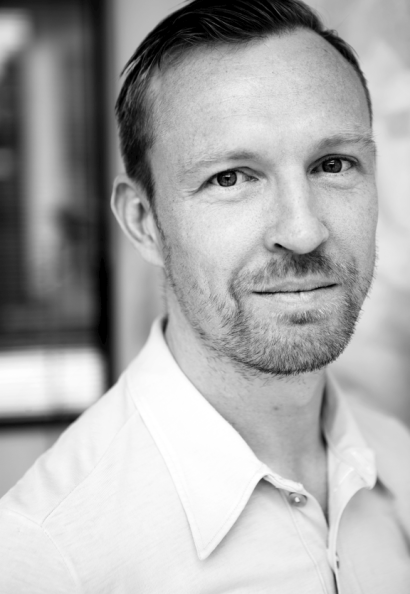
Political scientist Vincent
Stuer was a speechwriter for the European Commission when José Manuel
Barosso was president. Before that, he was spokesman for Karel De Gucht, then
foreign minister in Belgium. Since September, he has been press attaché to the
European Parliament for the Dutch D66 party, which is a member of the liberal
ALDE party, of which Guy Verhofstadt is president.
In 2017, he wrote Unsung, a powerful play that tells the story of a
power-hungry politician who falls on his way to the top. Last summer, actor
Valentijn Dhaenens performed this monologue at Edinburgh's famous Fringe
Festival and won the prestigious Fringe Award.
As a political scientist, Vincent Stuer published a book in the Dutch language
on the rise of nationalism. He shows how this rise is irreconcilable with the
future of Europe. In May 2018 he wrote a new book, Curb Your Idealism,
which is to be read as a plea for the European Union.
Le politologue, Vincent
Stuer était speechwriter pour la Commission européenne lorsque José
Manuel Barosso en était président. Avant cela, il était porte-parole de Karel
De Gucht, alors ministre des Affaires étrangères en Belgique. Depuis septembre,
il est attaché de presse au Parlement européen pour le parti néerlandais D66
qui est membre de la fraction libérale ALDE, dont Guy Verhofstadt est
président.
En 2017, il écrivait Unsung, une pièce de théâtre puissante qui raconte
l’histoire d’un homme politique assoiffé de pouvoir et qui chute sur le chemin
qui le mène vers le sommet. L’été dernier, l’acteur Valentijn Dhaenens
interprétait ce monologue au célèbre Fringe Festival d’Édimbourg, et y
remportait le prestigieux Fringe Award.
En tant que politologue, Vincent Stuer a publié, en néerlandais, un livre sur
la montée du nationalisme. Il y montre comment cette montée est inconciliable
avec l’avenir de l’Europe. En mai 2018, il écrivait un autre livre, en anglais,
Curb Your Idealism, qui est à lire comme un plaidoyer pour l’Union
européenne.
Venue: University St. Louis, Auditorium OM 10,
6, rue de l'Ommegang, 1000 Brussels
Simultaneous Translations in French, Dutch and English
Schedule: 9.00 AM – 7.00 PM
________________________
Adresse: Université de St. Louis, Salle OM 10
6, rue de l'Ommegang, 1000 Bruxelles
Traductions simultanées en français, anglais et néerlandais
|
New Lacanian School Nous contacter : accueil@amp-nls.org Inscription : https://amp-nls.org/page/fr/42/sinscrire-nls-messager Le site de la NLS : https://amp-nls.org Blog du Congrès NLS 2018 : nlscongress2018.com Lacan Quotidien : http://www.lacanquotidien.fr/blog/ |
New Lacanian School Registration:
website
: Blog of the 2018 NLS Congress: nlscongress2018.com |

The Riace Model
Carla Antonucci
The topic that is currently of the uttermost interest in Italy is the vicissitude of the Mayor of Riace, a man that has been making the headlines for quite a few years already, although he is neither the typical Italian politician nor a celebrity. I believe that this man is an example of the conversation that resists and fights the discourses that kill, which Gil Caroz refers to.
This man has been arrested for abetting clandestine immigration. He openly refused to obey a law that forbids aiding people in danger, and has put himself against all those that are just applying the law. He has pushed himself to take resounding stands, like when he offered to welcome and accommodate unaccompanied minors and pregnant women from the Aquarius ship that we all have heard of.
What strikes me about this man is his “being Lacanian”. He defines his work as the result of encounters, some positive, others not so much. His story starts in 1998, when the attention on migration was not as prominent, and he wasn’t a politician but a simple teacher. “A symptom” is vexing his town: Riace is relentlessly moving towards its death, it is depopulating, all that remains are empty houses left by migrants that fled a town that wouldn’t afford them an opportunity. There are only the elderly and a few hopeless citizens left to watch the ship go down.
One day, coincidence brought to the shores of the small town a sinking sailing ship of refugees. The migrants arrived. Domenico Lucano sees an opportunity in this landing, he is not afraid of diversity, he offers them the abandoned homes of the town’s migrants along with job education. From a fortuitous encounter, the Mayor of Riace thus transformed the town’s symptom into an opportunity, becoming a model that is looked up to all over the world and adopted as a guiding example throughout the refugee crisis all over Europe.
Today Riace is on its knees again, the state law has driven away the migrants and exiled the Mayor, resulting in a community that is bound to disappear, becoming an example of a discourse that kills.
The openness of this man strikes me, an intense desire transpires, an enthusiasm that is long lost in today’s political scene. He grounds his actions in the meaning of humanity. His words are understandable by all, during a television interview when he’ll say, “When you see someone dying it is impossible to remain indifferent, you cannot sit still because the law says so.” This is what Lucano calls the Law of Normality, that could be compared to those that Lacan comments in Seminar VII, “the unwritten laws of the Δίκη”, that Antigone defends contravening the laws of Creon as a representative of the sovereign law, of the law by all means, a law that overflows, goes too far and becomes a tragedy.
Venue: University St. Louis, Auditorium OM 10,
6, rue de l’Ommegang, 1000 Brussels
Simultaneous Translations in French, Dutch and English
From 9.00 AM to 7.00 PM

Activités des sociétés et groupes de la NLSActivities of the Societies and Groups of the NLS


____________________________ 

PIPOL 9 

________________________
November/Novembre 2018 ASREEP-NLS (Suisse)Genève


Neuchâtel
Fribourg
Martigny

Aigle
London Society-NLS (United Kingdom)London


The Formation of the Analyst: Analysis Supervision & Pass (1). Guest Speaker: Bruno de Halleux Other speakers: Susana Huler, Yannis 
Société hellénique-NLS (Grèce)Athènes

GIEP-NLS (Israel)Tel Aviv

Kring voor psychoanalyse (Belgium)Gent
ICLO-NLS (Ireland)Dublin


Bulgarian Society of Lacanian Psychoanalysis of the NLS (Bulgaria)Sofia

Sofia

Cercle de Cracovie (Pologne)Cracovie

Cercle de Varsovie (Pologne)Poznań

NLS-Copenhagen (Denmark)Copenhagen
NLS-Québec (Canada)Montréal

Lacan Circle of Australia (Australia)Melbourne and via Zoom
Seminar: "The Neuroses: Structure and Symptom", conducted by Russell Grigg.


Lacanian Compass (USA)Video Lecture

Member Conversations Online
New York City
Houston, Texas
Miami, Florida
Columbia, Missouri
ACF-Portugal (Portugal)Lisbonne


Berlin (Allemagne)Berlin


Amsterdam (The Netherlands) Amsterdam
Ukraine Kiev
XXVIII-ème Séminaire du Champ freudien en Ukraine "La pulsion, le sexe et la mort", avec Bruno de Halleux (Bruxelles, Belgique). 
RussieMoscou


Saint-Petesbourg
Vienna (Austria) Vienna

______________________________________________________ The Nottingham-Dublin Lacanian Studies Programme
Publications
"¡URGENT!"TLR6 is coming out this month! Click on the image to subscribe. 
Recently Out:via Lacan"Singulariteiten"The third edition of the journal of the Kring voor psychoanalyse van de NLS 
Recently Out:Desassossegos La nouvelle revue de psychanalyse de 
Scilicet in English –The Ordinary Psychoses and the Others, Under Transference La Revue International de Psychanalyse de l'EFPMental 37"Désirs de démocratie"
Other Publications /D'autres publications
NLS-Québec :Agrafes et inventions dans la psychose ordinaire 
Les Cahiers de l’ASREEP-NLS nº 2, mars, 2018"Conversation du TyA"« Les addictions sans substances »Réserver un Numéro des Cahiers auprès de nelson.feldman@bluewin.ch ou de alexandra.clerc555@gmail.com 
The 2nd issue of the Journal from the Lacanschen Orientierung BerlinThe 4th issue of the ICLO-NLS online Newsletter, Scriobh

Revue internationale de la psychanalyse N 7 en langue russe. Pour commander: THE LACANIAN REVIEW 5JOURNAL OF THE NEW LACANIAN SCHOOL AND THE WORLD ASSOCIATION OF PSYCHOANALYSIS

LROTHE LACANIAN REVIEW ONLINE
Introduction à la clinique psychanalytique. Neuf conférences espagnoles

New Lacanian SchoolContact: New Lacanian SchoolEnquiries: Nouvelle inscription: New registration: Vous désinscrire en cliquant ici: Unsubscribe by clicking here: Crédit image pour le logo NLS et ses déclinaisons ©Anish Kapoor, 2014
NLS Nouvelle École Lacanienne de Psychanalyse – New Lacanian School of Psychoanalysis
Vous recevez cette lettre parce que vous êtes inscrit à NLS-messager / You receive this because you subscribed to NLS-messager
|


