


|
New Lacanian School Nous contacter : accueil@amp-nls.org Inscription : https://amp-nls.org/page/fr/42/sinscrire-nls-messager Le site de la NLS : https://amp-nls.org Blog du Congrès NLS 2018 : nlscongress2018.com Lacan Quotidien : http://www.lacanquotidien.fr/blog/
|
New Lacanian School Registration: NLS
website
: Blog of the 2018 NLS Congress: nlscongress2018.com |

He will be at the Forum!
He comes from England.
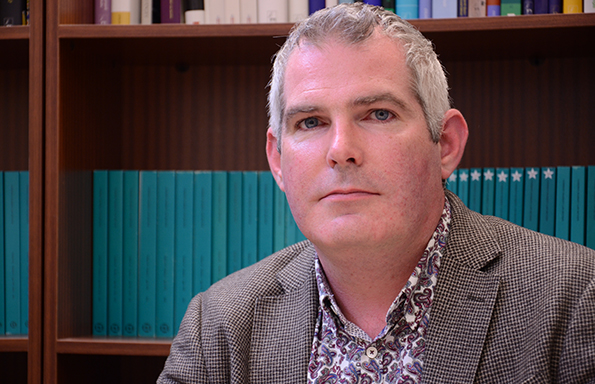
Michael Dougan is Professor of European Law at the
University of Liverpool. He is an established academic authority on EU
constitutional law and Joint Editor of the Common Market Law Review. His
work has contributed to wider public and political debates about European law,
such as the expert advice he has provided to numerous UK Parliamentary
enquiries and to a range of UK public bodies and Union institutions.
Michael's
public engagement activities, including videos of his lectures before and after
the 2016 UK referendum, received extensive public and media attention and he
continues to be a popular authority on the matter for individuals and groups
all around the world.
Venue: University St. Louis, Auditorium OM 10,
6, rue de l'Ommegang, 1000 Brussels
Simultaneous Translations in French, Dutch and English
Schedule: 9.00 AM – 7.00 PM
|
New Lacanian School Nous contacter : accueil@amp-nls.org Inscription : https://amp-nls.org/page/fr/42/sinscrire-nls-messager Le site de la NLS : https://amp-nls.org Blog du Congrès NLS 2018 : nlscongress2018.com Lacan Quotidien : http://www.lacanquotidien.fr/blog/ |
New Lacanian School Registration:
website
: Blog of the 2018 NLS Congress: nlscongress2018.com |
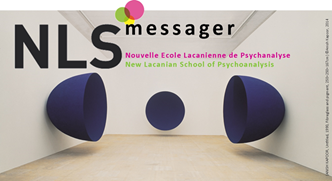

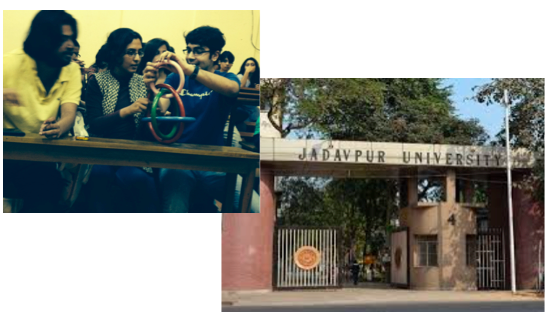
Conferences in Kolkata (Calcutta), India
with Frank Rollier
Cartel Delegate of the NLS
28 October in the Lacan Study Circle: "The Function of Cartels"
29 October at Javadpur University: "Hysteria Today"
Department of English (Prof Santanu Biswas)
30 October in the Lacan Study Circle: Theoretical and Clinical Seminar on "The Treatment of Extraordinary Psychoses"
|
New Lacanian School Nous contacter : accueil@amp-nls.org Inscription : https://amp-nls.org/page/fr/42/sinscrire-nls-messager Le site de la NLS : https://amp-nls.org Blog du Congrès NLS 2018 : nlscongress2018.com Lacan Quotidien : http://www.lacanquotidien.fr/blog/ |
New Lacanian School Registration:
website
: Blog of the 2018 NLS Congress: nlscongress2018.com |

with Yves-Claude Stavy
27 October 2018

|
New Lacanian School Nous contacter : accueil@amp-nls.org Inscription : https://amp-nls.org/page/fr/42/sinscrire-nls-messager Le site de la NLS : https://amp-nls.org Blog du Congrès NLS 2018 : nlscongress2018.com Lacan Quotidien : http://www.lacanquotidien.fr/blog/ |
New Lacanian School Registration:
website
: Blog of the 2018 NLS Congress: nlscongress2018.com |

She will be at the Forum!
She is Swedish.

Soraya Post
is head of the anti-racist and pro-feminist Swedish party, the Feminist
Initiative. She was elected to the European Parliament in 2014. She is also a
member, in the European Parliament, of the Progressive Alliance of Socialists
and Democrats, S & D group, coordinator of the group at the Subcommittee on
Human Rights (DROI) and its spokesperson on Roma and human rights issues.
Before being elected MEP, she worked as a human rights strategist
in the Västra Götaland region of Sweden. She has been a human rights activist
all her life, focusing more specifically on empowering Roma women and the
self-determination of Roma society.
Venue: University St. Louis, Auditorium OM 10,
6, rue de l'Ommegang, 1000 Brussels
Simultaneous Translations in French, Dutch and English
Schedule: 9.00 AM – 7.00 PM
|
New Lacanian School Nous contacter : accueil@amp-nls.org Inscription : https://amp-nls.org/page/fr/42/sinscrire-nls-messager Le site de la NLS : https://amp-nls.org Blog du Congrès NLS 2018 : nlscongress2018.com Lacan Quotidien : http://www.lacanquotidien.fr/blog/ |
New Lacanian School Registration:
website
: Blog of the 2018 NLS Congress: nlscongress2018.com |

In Germany, leading members of the AfD, Alternative for Germany, have recently broken the shame barrier. And we are witnessing the international deployment of this symptomatic posture of the state of the world. No good word can counter the destructive enjoyment that is at work. Can we hope, at least, as analysts, to touch the ‘I don’t want to know anything about that’, one by one, in order to wear down the passion of indifference.
One of the leaders of the AfD, Alexandre Gauland, published an opinion piece entitled “Why Populism?” in the Frankfurter Allgemeine Zeitung, 6 October, which, according to historians and journalists, paraphrases Hitler’s remarks in a 1933 speech at a Siemens factory in Berlin. LeMonde.fr does not make an empty reductio ad hitlerum but shows how, if this platform is not strictly a plagiarism (it comes very close to that, however), the ideology that underlies it is unequivocally in the same vein. Moreover, the banalization accentuates the unacceptable nature of such remarks, the author having managed to describe the Nazi period as “a bird dropping in history”; which is rather little compared to the glorious millennial history of Germany. The “uprooted international clique” targeted by Hitler “that stirs up hatred between peoples”, becomes “a globalized class” that lives at the expense of the people and has nothing but contempt for them – the true people, that is, who are attached to their roots. Antisemitic hints are barely masked. Especially when one reads that Bjoern Hoecke, another figure of the German far right, called the Holocaust memorial in Berlin a “monument of shame”. The target today has widened. Implied: the Jews. And stated: the migrants, the democrats, the “Europeans”. Same disadvantages, same treatment! The pro-Nazis have not ceased to be there, even if there were limits imposed on them by law. These limits having now been crossed, there is an echo, hammered at by Marine Le Pen or Salvini et al, of the linguistic management of fear, the history of nations sullied by the outsider. One more step.
For other supporters of the party, it is time to change the politics of memory and pay tribute to the armed forces of the Reich, just like France for example, honouring De Gaulle and England Churchill … Added to this is the announcement a few days ago of the creation of a “Jewish section” of the AfD, consisting of 19 Jews, members of the party, conceived as …. a guarantee against the antisemitism of the Muslims! Why not a section for Christians of the East? Nationalism has sometimes wanted to give itself the airs of philosemitism, even a little softened as, sometimes, with Maurice Barres, but anti-Semitism is in its nature.
And then to give an idea of the beautiful solidarity expected by some, let us evoke this German polemic on establishing of online platforms encouraging the denunciation of teachers critical of the AfD on the basis of their “obligation to neutrality”. Here neutrality would be close to indifference.
In his “Note on Shame”, Jacques-Alain Miller took up a question from Éric Laurent on “(…) the moral phase into which we’re supposed to have entered since the fall of the Berlin Wall”, giving rise to “a surge of excuses, regrets, of pardons, of repentances, to the point where having shame would thus become a global symptom.” What is becoming a global symptom, however, is the reversal of this moral posture, which could make one ask oneself if it went too far, a reversal which can also be read, when, on September 26, at the UN, the Hungarian Interior Minister, Péter Szijjártó, was able to declare that “migration is not a fundamental human right” and that the global compact for refugees and migrants “is strongly biased, unbalanced, dangerous and will cause new waves of migration.” This global pact, initiated in September 2016 with the Declaration of New York for Refugees and Migrants, has been approved by all 193 UN member countries – with the exception of the United States – and its final approval must be reached in December. Poland, Austria, Hungary will follow Trump. All this is going very quickly.
Translated by Janet Haney
Venue: University St. Louis, Auditorium OM 10,
6, rue de l’Ommegang, 1000 Brussels
Simultaneous Translations in French, Dutch and English
Schedule: 9.00 AM – 7.00 PM
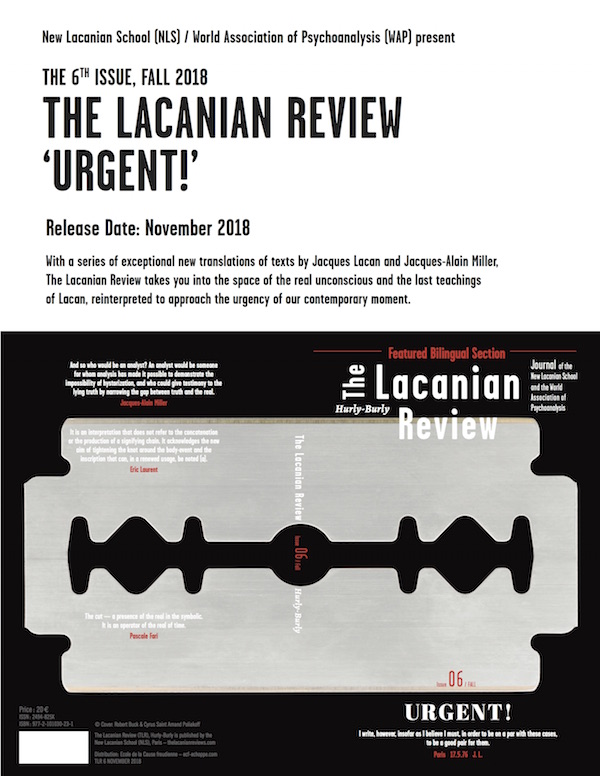
The 6th Issue of The Lacanian Review, Fall 2018
‘URGENT!’
Release Date:
November 2018
Brief
With a
series of exceptional new translations of texts by Jacques Lacan and
Jacques-Alain Miller, The Lacanian Review
takes you into the space of the real unconscious and the last teachings of
Lacan, reinterpreted to approach the urgency of our contemporary moment.
Presentation: The Lacanian Review 6 ‘URGENT!’
There is not a moment to lose. The acceleration of culture and the
vertiginous pressure of the drive seem to collapse the instant
to see, the time to understand and the moment to conclude. The urgent subject
of the now cannot catch up to rapid cycles of political upheaval and social
media streams turned into torrents of data. Production overflows consumption in
a tidal wave of imaginary cacophony. How does psychoanalysis today respond to
urgent times?
For its 6th issue, The
Lacanian Review (TLR) tasks the
signifier, Urgent!, to orient the
work of the New Lacanian School (NLS) in examining the urgent cases that occupy
our clinic in
preparation for the 2019 NLS Congress in Tel Aviv: ¡URGENT! Tracing the edge of the latest
Lacan, Bernard Seynhaeve (President of the NLS) curated a series of newly established texts by Jacques
Lacan and Jacques-Alain Miller, translated by Russell Grigg, appearing in the first ever bilingual featured section of TLR. Four lessons from the seminars of
Jacques-Alain Miller frame this issue.
TLR 6 draws heavily
from the work of the current Analysts of the School to explore four new
fundamental concepts of psychoanalysis: Pass,
Real Unconscious, Urgent Cases, and Satisfaction. Interviews with Angelina Harari
(President of the WAP), Ricardo Seldes (Director of Pausa), and Lee Edelman (Professor of English Literature at
Tufts University) elaborate fundamental concepts
across the work of the School One, the clinic of applied analysis, and literary
theory in dialogue with psychoanalysis. A groundbreaking orientation text by Éric
Laurent from the 2018 Congress of the World Association of Psychoanalysis (WAP)
will be published for the first time in English, along with clinical cases
exploring transference and psychosis. And finally, approaching the problem of
temporality in psychoanalysis, this issue spans Freudian time-management to the
logic of the cut in the Lacanian Orientation. Make haste and subscribe to The Lacanian Review – It’s urgent!
About The Lacanian Review
The Lacanian Review, the English language journal of the New Lacanian School
(NLS) and the World Association of Psychoanalysis (WAP), publishes newly
established texts by Jacques Lacan, Jacques-Alain Miller, and prominent
international figures of the Lacanian Orientation. This semiannual print series
features testimonies of the pass, new theoretical developments in Lacanian
psychoanalysis, clinical cases, dialogues with prominent academics, and
articles on contemporary culture, politics, art and science. Each issue
explores a theme intersecting the symptoms of our era and emerging work in the
NLS.
Contact
The Lacanian Review
Subscribe: https://www.ecf-echoppe.com/produit/abonnement-a-the-lacanian-review/
Marie-Hélène Brousse, Editor in Chief
Cyrus Saint Amand Poliakoff, Managing Editor / cyrus.saint@gmail.com
|
New Lacanian School Nous contacter : accueil@amp-nls.org Inscription : https://amp-nls.org/page/fr/42/sinscrire-nls-messager Le site de la NLS : https://amp-nls.org Blog du Congrès NLS 2018 : nlscongress2018.com Lacan Quotidien : http://www.lacanquotidien.fr/blog/ |
New Lacanian School Registration:
website
: Blog of the 2018 NLS Congress: nlscongress2018.com |


Language at Degree Zero
Carlo De Panfilis
Racism, or hatred of the Other, shifts its targets according to how the forms of social bonds change (1).
The globalized capitalist economic system, science and technology have defined new social positions. The imposition of the Universal upon every social order has caused fundamental changes in the field of ethics. The liberal free market has resulted in a retreat on the level of social rights. The counterweight of the single market has produced an exacerbation and extension of the processes of segregation and a reduction of the sense of belonging to a community. On the one hand, therefore, we are witnessing the generalized and multiple homogenization of the modes of jouissance which fragment social ties, producing a hedonistic individualism, exacerbating and concealing the very lack of jouissance itself. On the other hand, we are adrift among multiple productive, economic and social crises, with the loss of acquired civil rights, which come head to head with an increase in immigration. It follows that the current subjectivity is marked by a fragmentation both of social bonds and of the possibility of recognizing oneself as belonging to a community.
The solution proposed and championed by so-called “populism” is the establishment of a unifying identity. The construction of this identity begins either by claiming some internal specificity of the individual to be defended, or it is an identity in opposition to some external otherness, defined precisely in its opposition to the other. For those individuals unable to recognize themselves in this common construction, the only shared identity is that of the collective drives and fears, in the name of an absolute mastery of all ways of jouissance and the rejection of differences.
In this way are born new forms of identitarian conformity. The attachment to a particular type of identity favors radicalization processes and fuels conflicts. This fueling of conflict is sustained and pursued through a language that does not produce either discourse or dialogue but only places demands upon, and requires rejection of, the other, culminating in its most radical and generalized outcome: the fear of being replaced. This is a self-perpetuating process and presents serious risks of dehumanization. We hear political leaders who foreshadow that an “ethnic substitution”, desired by both internal political forces as well as international “power centers”, is happening in our country. The tone of the declarations may change slightly, but not their meaning: “I don’t accept the Ius Soli in Italy, it is a substitution of peoples”; “The left, worldwide, has planned an invasion (of immigrants), a substitution of peoples”; “An operation of ethnic replacement is under way, coordinated by Europe.” Therefore, we have a conflict that produces a language without words, which cannot be dialectically overcome because it posits itself as a “we” that is not only threatened with “elimination” but even with “substitution”.
The work of Freud is opposed to this idea of a unifying identity with the introduction of the unconscious and the consequent subjective division. Lacan says: “The idea of a unifying unity of the human condition has had on me the effect of a scandalous lie” (2). The language that aims at a unifying identity consists of an appeal to “values”, such as those of an ethnic or religious identity, which draw their strength from being presented as “truth”. It is a language that can be expressed in different forms, evocative and easily presentable in the form of an image, of the apparently “true” and weighty phrase, of forms of communication whose emotional impact is great but whose dialectic content is nil. Zero degrees of language, whose richness becomes ornamental, iconic, impressive, raises up barbed wire against otherness and with it democracy.
(1) Laurent, É., “Le racisme 2.0”, Hurly-Burly, No. 11, 2014, pp. 217-22.
(2) Lacan, J., Intervention at Johns Hopkins University, Baltimore (18-21/10/1966)
Venue: University St. Louis, Auditorium OM 10,
6, rue de l’Ommegang, 1000 Brussels
Simultaneous Translations in French, Dutch and English
Schedule: 9.00 AM – 7.00 PM
|
New Lacanian School Nous contacter : accueil@amp-nls.org Inscription : https://amp-nls.org/page/fr/42/sinscrire-nls-messager Le site de la NLS : https://amp-nls.org Blog du Congrès NLS 2018 : nlscongress2018.com Lacan Quotidien : http://www.lacanquotidien.fr/blog/
|
New Lacanian School Registration: NLS
website
: Blog of the 2018 NLS Congress: nlscongress2018.com |


COMMUNIQUÉ
Due to the massive interest generated by the Forum, the University St. Louis has given us a larger room, more modern and pleasant! The Forum will be held in Room OM 10 of the University St. Louis, 5 rue de l’Ommegang – 1000 Brussels.
Furthermore, a large number of speakers have already confirmed their desire to deliver an intervention at the Forum. Therefore we are extending the Forum by an extra 2 hours. It will take place on the 1st of December from 9.00 – 19.00.
The Organizers
Venue: University St. Louis, Auditorium OM 10,
6, rue de l’Ommegang, 1000 Brussels
Simultaneous Translations in French, Dutch and English
Schedule: 9.00 AM – 7.00 PM
|
New Lacanian School Nous contacter : accueil@amp-nls.org Inscription : https://amp-nls.org/page/fr/42/sinscrire-nls-messager Le site de la NLS : https://amp-nls.org Blog du Congrès NLS 2018 : nlscongress2018.com Lacan Quotidien : http://www.lacanquotidien.fr/blog/
|
New Lacanian School Registration: NLS
website
: Blog of the 2018 NLS Congress: nlscongress2018.com |


¡URGENT !
2019 Congress of the NLS
________________
The Argument
Subjective Urgency and Transferential Unconscious
In his “Preface to the English-Language Edition” of Seminar XI,[i] Lacan speaks of his urgent cases. The urgency that Lacan speaks about in this text from his very last teaching is not the subjective urgency that he speaks about in “On the Subject Who Is Finally in Question”, written in 1966.[ii]
As Jacques-Alain Miller reminds us in his course,[iii] when Lacan speaks of a subjective urgency in 1966 it is already a question of the formation of psychoanalysts: “[…] there will be some psychoanalyst who responds to certain subjective emergencies [urgences subjectives]”.[iv] This text is contemporary with the “Proposition of 9 October”[v] on the invention of the pass. In this 1967 Proposition, Lacan uses the concept of the subject notably to introduce the matheme of transference on the basis of the subject supposed to know. “A subject” he says, “is supposed […] by the signifier that represents him”.[vi] From which it follows that the algorithm of transference is deduced from the concept of the subject of the signifier. Urgency, as Lacan conceptualises it in these texts of 1966 and 67, is at Archimedean point of the establishment of transference. Situated at this logical moment of subjective destabilization, it accounts for the precipitation of the subject in the direction of haste, making it possible to put him to work. This “urgency” [urgence] is the traumatic moment when, for a subject, the signifying chain has been broken. The psychoanalyst is the one who listens to those who complain of an acute rupturing of the signifying chain.
The subjective urgency or emergency, this urgence subjective, is the point of departure that presides over the establishment of the signifier of transference in its relation to le signifiant quelconque – to “any” signifier. Lacan refers to what we call the demand of a potential analysand as an urgent request [la requête d’une urgence]. In the psychoanalytic sense, subjective urgency implies a call to the Other, to S2.
Urgent Cases and the Parlêtre
The “Preface to the English-Language Edition” of Seminar XI is a three-paged text that Lacan wrote in 1976 as an extension of his Seminar, The Sinthome; Miller even considers it to be this seminar’s last lesson. This short text is a new way of taking up his “Proposition” on the pass. It is for this reason that Miller considers it to be, in some way, Lacan’s last will and testament.
When he brings up the pass again at the end of his teaching, Lacan no longer uses the signifier “subjective urgency”, but that of “urgent cases”.
Other signifiers are also not found in this text. While “transference” finds its algorithmic definition in the 1967 “Proposition”, this signifier is nowhere to be found in the later text. And for good reason, for in his very last teaching, the subject supposed to know is itself thrown into question. The subject supposed to know is the hypothesis of the Freudian unconscious, the transferential unconscious. In this final text, the signifiers “knowledge”, “subject supposed to know” and “transference” no longer appear. In this regard, Miller points out that he prefers that we say that we come back from one session to the next because ça pousse, “it pushes”, ça urge, “it urges” rather than because of transference.
Knowledge is no longer there because Lacan no longer believes in it. He considers knowledge to be only a semblant, a hare-brained lucubration about lalangue.[vii]
On the other hand, while knowledge produces nothing but lies, we find another signifier, that of “lying truth”.[viii] And instead of the signifier of transference we find “these urgent cases”.
Admittedly, urgency here is, on the one hand, just as in 1967, what presides over the analysis, what presides over transference. In the analytic situation, the psychoanalyst is this person, this quelconque or “whomsoever” who embodies this place of address for analysands – these speaking beings that “run”[ix] after the truth – the one who agrees to “pair” with these urgent cases. We meet an analyst when we are in a state of urgency. But, on the other hand, Lacan takes an additional step that goes beyond transference; there is another urgency. In analysis, there is always urgency, there is always something that pushes, that urges, that presses and that is beyond transference, even if one takes one’s time or lets it drag on.[x] Urgency is something that presses the parlêtre. Something of the order of “the urgency of life”, as Dominique Holvoet magnificently emphasized in his teaching as an AS[xi].
“This indicates that there is a causality operating at a deeper level than the transference, one that Lacan characterizes as a level of satisfaction insofar as it is urgent and analysis is its means.”[xii]
We run after the truth, says Lacan; this is what happens in free association, but truth cannot be caught by the signifier.
What is urgent for Lacan at the end of his teaching – the analytical urgency, that which pushes the parlêtre – consists therefore of running after truth, of pursuing the truth that harbours the real. But this truth cannot be captured with words. The urgency in question is the attempt to catch hold of a truth that can never be reached. This race to pursue the truth that we never can catch is what provides the satisfaction of these urgent cases, of the speaking bodies. This is why one can say that analysis is the means for this urgent satisfaction.
Satis, etymologically the Latin “enough”, constitutes the root of the signifier “satisfaction”, the “it is enough” of the pass. Consequently, satisfaction comes in two modalities: that of satis – “it is enough”, and that of a new way of knowing how to do with one’s real, with the non-resorbable jouissance.
In this final text, Lacan no longer says “the psychoanalyst derives his authorisation only from himself”,[xiii] because the subject produced by free association is thrown back into question. Instead, he emphasizes what is urgent, the impulse that pushes the subject to “hystoricize himself” [“s’hystoriser de lui-même”][xiv], namely to hystoricize himself without making a pair with his analyst. As you can see, in the very last Lacan, at the Archimedean point of the pass, what is at stake is urgent. The pass is done via the urgency of life.
[i] Lacan, Jacques, “Preface to the English Edition of Seminar XI”, The Lacanian Review, Issue No. 6, trans. R. Grigg, NLS, Paris, to be published in November 2018; see also, “Preface to the English-Language Edition of Seminar XI” The Seminar, Book XI, The Four Fundamental Concepts of Psychoanalysis, trans. A. Sheridan, W.W. Norton & Co., New York/London, 1998, pp. vii-ix.
[ii] Lacan, Jacques, “On the Subject Who Is Finally in Question”, Écrits, trans. B. Fink, W.W. Norton & Co., New York/London, 2006, pp. 189-196. [TN: In this text, “urgences subjectives”, which appears in Lacan’s concluding sentence (when he is speaking about what an analytic formation permits one to respond to), is translated as “subjective emergencies”, which is indeed one of the meanings of the word “urgence”.]
[iii] Miller, Jacques-Alain, “L’orientation lacanienne. Le tout dernier Lacan” (2006-2007), class given at the Department of Psychoanalysis in the University, Paris 8. A first transcription of the three first lessons of this course, established by C. Bonningue, was published in Quarto 88-89 (December 2006) and 90 (June 2007); a second version established by C. Alberti and P. Hellebois is cited here and will be published in The Lacanian Review 6, op. cit. Unrevised by the author.
[iv] Lacan, Jacques, “On the Subject Who Is Finally in Question”, Écrits, op. cit., p. 196.
[v] Lacan, Jacques, “Proposition of 9 October 1967 on the Psychoanalyst of the School”, trans. R. Grigg, available online at: http://iclo-nls.org/wp-content/uploads/Pdf/Propositionof9October1967.pdf
[vi] Ibid.
[vii] Cf. Lacan, Jacques, The Seminar, Book XX, Encore, trans B. Fink, W.W. Norton & Co, New York/London, 1999, p. 139.
[viii] Lacan, Jacques, “Preface to the English Edition of Seminar XI”, The Lacanian Review 6, op. cit., but also, “There is no truth that, in passing through attention, does not lie”, and “The mirage of truth, from which only lies can be expected”; see also, “Preface to the English-Language Edition of Seminar XI” The Seminar, Book XI, The Four Fundamental Concepts of Psychoanalysis, op. cit., pp. xi, vii, viii.
[ix] Cf. ibid. (TLR), “Which doesn’t prevent one from running after [the truth]”; see also ibid., p. vii.
[x] Cf. Miller, Jacques-Alain, “L’orientation lacanienne. Choses de finesse en psychoanalyse” (2008-2009), class given at the Department of Psychoanalysis in the University, Paris 8, 21 January 2009. A first version of this text, transcribed by J. Peraldi et Y. Vanderveken was published as “La passe du parlêtre” in La Cause freudienne, No. 74, Navarin, Paris, 2010, pp. 113-23; a second version established by C. Alberti et P. Hellebois, with an English-language translation by R. Grigg, will appear as “The Speaking Being and the Pass” in The Lacanian Review 6, op. cit. Unrevised by the author.
[xi] Cf. Holvoet, Dominique, remarks pronounced during an « Interview pour PIPOL 5 », conducted by Patricia Bosquin, January 2011; « De la causation du sujet à la logique de la cure », talk given on 19/02/2011 at Bruges, published in INWIT; as well as many times during his teaching as AS.
[xii] Miller, Jacques-Alain, “The Speaking Being and the Pass”, The Lacanian Review 6, op. cit.
[xiii] Cf. Lacan, Jacques, “Proposition of 9 October 1967 on the Psychoanalyst of the School”, op. cit.
[xiv] Cf. Lacan, Jacques, “Preface to the English Edition of Seminar XI”, The Lacanian Review 6, op. cit; see also, “Preface to the English-Language Edition of Seminar XI”, The Seminar, Book XI, The Four Fundamental Concepts of Psychoanalysis, op. cit. p. viii.
Bernard Seynhaeve
Translated by Philip Dravers

|
New Lacanian School Nous contacter : accueil@amp-nls.org Inscription : https://amp-nls.org/page/fr/42/sinscrire-nls-messager Le site de la NLS : https://amp-nls.org Blog du Congrès NLS 2018 : nlscongress2018.com Lacan Quotidien : http://www.lacanquotidien.fr/blog/
|
New Lacanian School Registration: NLS
website
: Blog of the 2018 NLS Congress: nlscongress2018.com |