Newsletter

RADIO LACAN

No. 153


New Lacanian School
Désinscription: envoyez un message à : nls-messager-unsubscribe@amp-nls.org

Nous contacter: nls-messager-help@amp-nls.org

Nouvelle inscription: http://www.amp-nls.org/page/fr/42/sinscrire-nls-messager

| Le site de la NLS www.amp-nls.org | 

New Lacanian School
Unsubscribe by sending a message to:nls-messager-unsubscribe@amp-nls.org
Enquiries: 
nls-messager-help@amp-nls.org

New registration: http://www.amp-nls.org/page/gb/42/sinscrire-nls-messager

| The website of the NLS www.amp-nls.org |


Images intégrées 1

Activités des Sociétés et Groupes de la NLS
 
Activities of the Societies and Groups of the NLS


Report on the Knottings Seminar of the Hellenic society of the NLS

Images intégrées 4


The Knottings Seminar of the Hellenic
Society of the NLS took place on Saturday, October 22nd, in the
eastern auditorium of the “Georgios Gennimatas” Athens General Hospital. This first
event of the academic year was dedicated to the study of the theme of the next
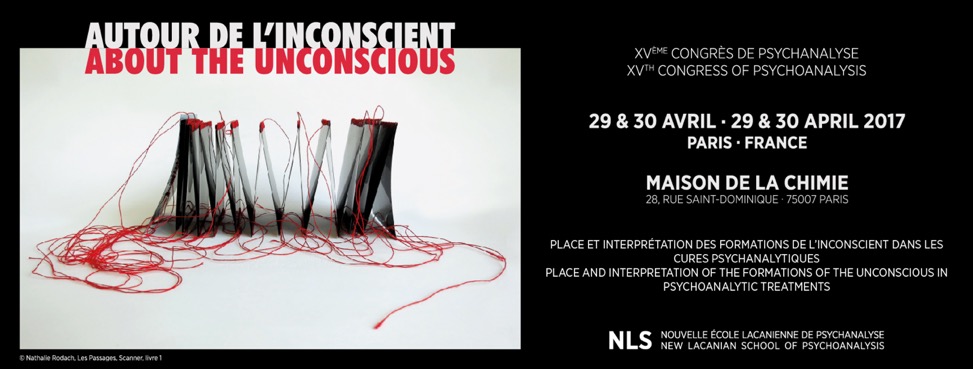
NLS Congress and was accordingly entitled, “About the Unconscious: Position and
Interpretation of the Formations of the Unconscious”.

The seminar’s theoretical
introduction by the vice-president of the NLS Bernard Seynhaeve bore the Freudian
title, “The Royal Road to the Unconscious”. To put us on the pathway of the
next NLS Congress, Bernard Seynhaeve spoke about the transition from the
transferential to the real unconscious. He remarked that in Lacan’s original
teaching, interpretation offered the subject effects of an illusion of the
order of “it was written”; the unconscious-memory. Yet in the end of his teaching
Lacan detached himself from the unconscious-memory, and the aforementioned
illusion was subsequently replaced by a new writing, that of Lituraterre, the sinthome and the One that constitutes
the antechamber of the real. There is therefore a sliding from the symptom to
the sinthome, from the transferential
unconscious to the real unconscious. Bernard Seynhaeve demonstrated this transition
based on two formations of the unconscious, two dreams: 1) a dream that
accompanied the beginning of his own analysis and 2) a dream of the Pass – not
of his own, but rather Freud’s dream of Irma’s injection. Bernard Seynhaeve
characterized this as a dream of the Pass thanks to the fact that in the second
climax of the dream, following the horrendous vision of the inside of Irma’s
mouth, Freud teaches us of a writing beyond which we cannot go.

The first
clinical case of the day was presented by Alan Rowan, under the title “Not
Wanting to Know”. Alan Rowan spoke of a female subject who visited him overwhelmed
with anxiety stemming from an impasse in her marital life. Analysis offered that
subject the space to speak about her history of romantic relationships and
about her family history. It was concluded that the fragile symptom of the
subject’s choice of a partner had been formed on the basis of “not seeing and
not knowing”.

The next
clinical case came from Joanne Conway. She presented us with the case of
another female subject under the equivocal title “Keeping Mum”. This was the
case of a woman who had experienced a traumatic encounter with an evil Other.
An intervention by the analyst that showed the patient the possibility for another,
benevolent type of Other, was followed by rigorous work with dreams.

The last
clinical case of the day came from Argyris Tsakos. He presented the case of a
young woman who came to see him accompanied by two signifiers linked to her relationship
with her two parents. In the beginning, his pragmatic interventions bore
impressive results. Much later came a dream thanks to which the patient became capable
of following a new pathway that was not discouraged, although it meant leaving
analysis.

This seminar
was indeed a “knotting” of insightful theoretical and varied clinical work on
the unconscious. Its outcomes will certainly act as guidance for the Hellenic Society’s
work in the academic year that has just began.


Yannis Grammatopoulos

Hellenic Society of the
NLS


New Lacanian School
Désinscription: envoyez un message à : nls-messager-unsubscribe@amp-nls.org

Nous contacter: nls-messager-help@amp-nls.org

Nouvelle inscription: http://www.amp-nls.org/page/fr/42/sinscrire-nls-messager

| Le site de la NLS https://amp-nls.org |  

New Lacanian School
Unsubscribe by sending a message to:nls-messager-unsubscribe@amp-nls.org
Enquiries: 
nls-messager-help@amp-nls.org

New registration: http://www.amp-nls.org/page/fr/42/sinscrire-nls-messager

| The website of the NLS https://amp-nls.org |  


Images intégrées 1


Activités des Sociétés et Groupes de la NLS
 
Activities of the Societies and Groups of the NLS


GIEP – NLS
 
Images intégrées 3


New Lacanian School
Désinscription: envoyez un message à : nls-messager-unsubscribe@amp-nls.org

Nous contacter: nls-messager-help@amp-nls.org

Nouvelle inscription: http://www.amp-nls.org/page/fr/42/sinscrire-nls-messager

| Le site de la NLS https://amp-nls.org |  

New Lacanian School
Unsubscribe by sending a message to:nls-messager-unsubscribe@amp-nls.org
Enquiries: 
nls-messager-help@amp-nls.org

New registration: http://www.amp-nls.org/page/fr/42/sinscrire-nls-messager

| The website of the NLS https://amp-nls.org |  


Aucune image? Version web

NLS.Press

NLS-Press n° 23 – novembre / November 2016

Activités des sociétés et groupes de la NLS

Activities of the Societies and Groups of the NLS

Novembre / November 2016

ASREEP-NLS (Suisse)

  • 7 et 21 novembre

Genève

Séminaire d’introduction à la Psychanalyse lacanienne: “Où est passé l’inconscient aujourd’hui?” Avec Anne Edan, Sofía Guaraguara, Ludovic Bornand et Beatriz Premazzi.

  • 2 novembre

Genève

Journée Max und Moritz. Réseau CEREDA. Avec Frédéric Pacaud.

 
  • 16 novembre

Martigny

Atelier de Criminologie lacanienne, «C-o-r-p-s mis en acte ». Organisé par René Raggenbass.

GIEP-NLS (Israel)

  • 11th November

Haifa

“Little Hans” is the Hebrew-Arabic Psychoanalytic Center for Consultation and Treatment of Children and Adolescents. Director: Khalil Sbeit.

At the moment of its formal inauguration, the Center extends its invitation to an open Clinical Day under the title: “From a Social Referral to an Analytic Demand”; in the presence of Lilia Mahjoub and Gil Caroz.

For this clinical day, we intend to discuss the questions and challenges we encounter in the transition from the social referral to the analytic demand.

  • 12th November

Tel Aviv

“Desire for School”: Conversation with the participation of Lilia Mahjoub, followed by a conference by Lilia Mahjoub on the theme of the NLS Congress in Paris. 

London Society-NLS (United Kingdom)

  • 19th November 

London

Contemporary Lacanian Clinic: Place and Interpretation of Formation of the Unconscious in Psychoanalytical Treatments. Case presentation by Peggy Papada (LS) and Phil Dravers (LS, NLS and WAP). Discussants: Gabriela van den Hoven and Vincent Dachy
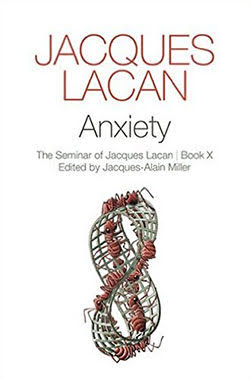
Bogdan Wolf (LS, NLS, AMP): “When Anxiety Emerges… An Introduction to the Seminar X by Jacques Lacan”.
Vincent Dachy (CFAR, LS, NLS, AMP): Presentation of the next NLS Congress: “Place and Interpretation of Formation of the Unconscious in Psychoanalytic Treatments”.

  • 22nd November

London

“Between Anxiety and Love”; Lacanian Lessons Seminar 2016 – 2017. Lesson 2: The cause of desire and the object a. Presented by Bogdan Wolf, with the participation of Phil Dravers.

  • 26th November 

London

Seminar XXIII Reading Group: “From Symptom to Sinthome”. Organizer: Roger Litten.

Société hellénique-NLS (Grèce)

La Crète

  • 12 novembre

Cours d’introduction à la psychanalyse sur le thème « L’inconscient en analyse », par Georgia Fountoulaki.
Séminaire théorique : « Pourquoi une analyse ?», par Georgia Fountoulaki.

  • 17 novembre

Cours d’introduction à la psychanalyse :  « Au commencement était le verbe », par Georgia Fountoulaki.

  • 22 novembre

Séminaire clinique et théorique : « Problème de diagnostic et de thérapie d’un cas limite », par Georgia Fountoulaki.

  • 26 novembre

Cours d’introduction à la psychanalyse : « L’objet regard », par Ioanna Fioraki.
Présentation et analyse de deux cas cliniques sur les thèmes : « J’existe ou pas ?», par Ioanna Vérigaki, et « Comment s’installe une analyse ?», par Vlassis Skolidis.
Séminaire théorique : « La notion de transfert, de Freud à Lacan », par Vlassis Skolidis.

Thessalonique

  • 26 novembre

Cercle psychanalytique de Thessalonique, sous l’égide de la Société hellénique:

Cinéma et psychanalyse – Projection du film The Lobster de Giorgos Lanthimos.

Animé par Réginald Blanchet.
Commentaires de Nouli Apazidou et du professeur Apostolos Karakassis.

Athènes

  • 1 novembre

Séminaire de clinique psychanalytique sous l’égide de la Société hellénique de la NLS : Séminaire théorique sur « La clinique des psychoses : questions préliminaires », par Eleni Molari, Argyris Tsakos et Panayotis Katsaros.

  • 19 novembre

IVe Journée sur l’École et la passe avec Laurent Dupont.


Kring voor psychoanalyse-NLS (Belgium)

  • 12 novembre

Gand

Atelier de recherche « Choses de finesse en psychanalyse ».
Tous les participants sont invités à lire deux leçons de « Choses de finesse en psychanalyse » de Jacques-Alain Miller. 4 + 1 personnes ouvrent la conversation avec une ou quelques questions.

Cycle de conférences : “L’expérience analytique, entre l’Unbewusste et l’une-bévue” avec Alexandre Stevens. Conférence autour du thème du Congrès de la NLS « Autour de l’inconscient – Place et interprétation des formations de l’inconscient dans les cures psychanalytiques ».

  • 23 novembre

Gand

Conversation sur la psychanalyse lacanienne aujourd’hui à l’occasion de la parution de via LACAN, la nouvelle revue néerlandophone de la NLS. Conversation avec Nathalie Laceur et Glenn Strubbe sur la psychanalyse lacanienne aujourd’hui. Sara De Vos animera la conversation.

  • 25 novembre

Gand

Séminaire de travail « L’École et la passe » Les témoignages de Laurent Dupont et Dominique Holvoet seront étudiés et discutés.

ICLO-NLS (Ireland)

  • 11th November

Dublin

ICLO-NLS Teaching Seminar 2016/2017: “The Trauma of Language” with Rik Loose. 

The series of four seminars will look at the development of Lacan’s ideas on language throughout the various phases of his work. Lacan changed his ideas on language on a number of occasions and we hope to demonstrate that these changes were not driven by ideas from the philosophy of language but by concerns around the pragmatic question of “what works clinically?” within a changing culture.

  • 25th November

Dublin

Meeting of ICLO-NLS Special Interest Group (SIG) Child and Adolescent Lacanian Psychoanalysis.

This working group aims to develop and share the Lacanian psychoanalytic clinic with children and young people. Its participants wish to investigate questions pertaining to their clinical work, from a variety of disciplines. Responsible: Joanne Conway

Bulgarian Society of Lacanian Psychoanalysis of the NLS (Bulgaria)

  • 22nd November

Sofia

Clinical Workshop 2016 – 2017

The “Clinical Workshop” is an activity of the Bulgarian Society of Lacanian Psychoanalysis. Organized for the past four years, it aims to open a space for the clinical discussion – theoretically oriented by Lacanian psychoanalysis – of clinical cases that have been prepared in advance and taken from the psychotherapeutic practice of a wide circle of professionals. Keeping the new elements from its 13th edition, the Clinical Workshop of the school year 2016 – 2017 started in October and will have one meeting each month until July 2017. 

Interventions: Vessela Banova, Dr. Evgueni Genchev, Desislava Ivanova, Theodora Pavlova.

Cercle de Cracovie (Pologne)

  • 14 novembre

Dans le cadre du point de consultation : travail sur le texte-argument préparatoire pour le Congrès de la NLS 2017 par Lilia Mahjoub : « Autour de l’inconscient. Place et interprétation des formations de l’inconscient dans les cures psychanalytiques ». 

Le sujet sera illustré par la présentation du cas de Dora par Monika Gzyl et Antoni Grzybowski. Présidente de séance : Małgorzata Gorzula. 

  • 26 novembre

Séminaire préparatoire au 8ème Colloque Psychanalyse-Psychothérapie    « Les voies de l’angoisse » (24-25 mars 2017) – sur la base de l’ouvrage Inhibition, symptôme et angoisse de Freud.

Continuation du séminaire mensuel de formation clinique autour de deux stages dans l’hôpital psychiatrique avec lequel le Cercle collabore depuis le mois de janvier 2015 :                                                                                                 1. Réflexion sur son stage dans l’hôpital par Emilia Prochownik.
2. Travail sur le diagnostic d’un cas clinique dans l’approche lacanienne sur la base de la transcription d’une conversation de J.-A. Miller avec le patient (Section Clinique de Paris – Saint-Denis) – deuxiéme discussion. 
Présidente de séance : Alina Henzel-Korzeniowska

  • 27 novembre

Séminaire de formation de 2 ans et demi, dans le cadre de l’étude des écrits de Lacan. Il portera sur le Séminaire IV de Lacan : La relation d’objet

Résumé des chapitres 1-11 – réflexions des participants, discussion.
Président de séance : Serge Dziomba.

Chaque rencontre comprend le commentaire d’un chapitre et une partie clinique. Certaines rencontres comporteront un élément supplémentaire : un bref commentaire d’un texte choisi de Freud par l’un des participants.

Cercle de Varsovie (Pologne)

  • 19 novembre

28e Séminaire de la NLS, « L’interprétation du rêve dans la conduite de la cure» avec Jean-Louis Gault.

ACF-Portugal

  • 3 – 10 – 17 – 24 novembre

Groupe de lecture : lecture du Séminaire XX de Lacan, Encore.

  • 3 – 10 – 17 novembre

Le séminaire ACF sur le « Ravage », animé par José Martinho.

  • 24 novembre

Le séminaire ACF sur les “Épiphanies”; animé par Filipe Pereirinha.

NLS-Copenhagen (Danmark)

  • 14th November

Copenhagen

Seminar on the Congress theme “About the Unconscious”; with Tommy Thambour.

Lacanian Circle of Melbourne (Australia)

  • 19th November

Melbourne

Study Day on “Crisis”

In 2016, the Lacan Circle of Melbourne dedicates its study days to examining crisis in both its contemporary and classical senses, with papers on the themes raised by Lacan’s Seminar X on anxiety. This year, the Lacan Circle will precede each study day with a brief introductory seminar to elementary concepts of Lacanian psychoanalysis. The seminars are intended to provide beginners and the tentative with an opportunity to familiarise themselves with some of the psychoanalytic lexicon.

NLS-Québec (Canada)

  • 7 novembre

Québec

Café Lacan : « Burnout : performance ou masochisme au travail ? », discussion proposée par Anne Marché Paillé, discutant Tahar Amghar, tous deux membres de NLS-Québec.
Activité organisée à Québec en association avec NLS-Québec.

  • 14 novembre

Québec

Séminaire de lectures lacaniennes à Québec : Le Séminaire XI Les quatre concepts fondamentaux de la psychanalyse, chapitres 1 et 2, présenté par Anne Marché Paillé, membre de NLS-Québec.
Activité organisée à Québec en association avec NLS-Québec.

  • 16 novembre

Montréal

Séminaire mensuel du Pont Freudien : Le Séminaire VII, L’éthique de la psychanalyse, chapitre 16 présenté par Anne Marché Paillé, membre de NLS-Québec ; discutante Mercedes Rouault, membre de NLS-Québec.


Lacanian Compass (USA)

  • Call for papers

Clinical Study Days 10, “Beyond Oedipus, Family Dramas, Family Traumas”; with the participation of Marie-Hélène Brousse and Pierre-Gilles Guéguen, Miami Beach, Florida, 3-5 February 2017. The Scientific Committee invites you to propose a case study for the CSD10, 15,000 signs, before November 20th. Please send to: ThomasSvolos@creighton.edu.​

New York Freud & Lacan Analytic Group (USA)

New York

  • 2nd November

Clinical Seminar on Obsessional Neurosis: Lacan, Seminar XII, Crucial Problems for Psychoanalysis, Ch. 17 (May 5, 1965).

  • 9th November

Miller, J.-A. (2013), “Spare parts” (trans. A.R. Price), Psychoanalytical Notebooks, 27.

  • 16th November

Clinical Seminar on Obsessional Neurosis: Lacan, Seminar XIV, The Logic of the Fantasy, Ch. 24 (June 21, 1967).

  • 30th November

Miller, J.-A. (2006) “Detached pieces” (trans. B.P. Fulks) Lacanian Ink, 28.

 *Meetings are free and open to all

Circle Lacanian Orientation of Omaha (USA)

  • 4th and 18th November

Omaha

Seminar: “Towards Clinical Studies Day 10: Beyond Oedipus, Family Dramas, Family Traumas”.

Secrétariat NLS-Est

  • 26 – 27 novembre

Kiev

24e Séminaire du Champ freudien en Ukraine

 « L’inconscient, ses formations et son interprétation en psychanalyse » avec Yves Vanderveken.

  • 12 novembre

Tirana

Séminaire du Champ freudien en Albanie 

« L’inconscient en acte dans l’expérience analytique – Rêves – Lapsus – Symptômes » avec Geert Hoornaert

Première séance du Séminaire V, Les formations de l’inconscient : vérité et satisfaction. Commentaire et discussion. Suivie de deux cas cliniques présentés par Alketa Coku et Klodiana Bardhoshi.

New Lacanian Field (Austria)

  • 18 – 19 November

Vienna

3rd Conference of the Viennese Psychoanalytic Seminar

“The Beginning of a Psychoanalytic Cure – Phenomena and Structure” with Francois Leguil, Marco Mauas and Perla Miglin; other participants: Avi Rynbicki, Markus Zöchmeister, Karin Brunner and Gerhard Reichsthaler.

Publications

THE LACANIAN REVIEW.HURLY-BURLY (NEW)

JOURNAL OF THE NEW LACANIAN SCHOOL AND THE WORLD ASSOCIATION OF PSYCHOANALYSIS

Issue 1

To subscribe/ buy TLR-HB

Hurly Burly n°11 - mai 2014

LRO

THE LACANIAN REVIEW ONLINE

To receive LRO weekly by e-mail you may subscribe by writing to: thelacanianreviewonline@gmail.com


Revue Internationale de Psychanalyse 6

Nouvelle publication de la Revue internationale de psychanalyse en langue russe ; le comité éditorial est constitué de Clotilde Leguil, Daniel Roy, Philippe Stasse avec la présidente de la NLS. Commander auprès d’Inga Metreveli: inga.metreveli@gmail.com

Publication of the London Society of the New Lacanian School

Via Lacan 1

Nouvelle publication du Kring voor Psychoanalyse de la NLS.


Psychoanalytical Notebooks 30

Special Issue

Publication of the London Society of the New Lacanian School

Lacanian Ink 48


New Lacanian School

Contact:

New Lacanian School

Enquiries:

Nouvelle inscription:

New registration:

Vous désinscrire en cliquant ici:

Unsubscribe by clicking here:

Crédit image pour le logo NLS et ses déclinaisons ©Anish Kapoor, 2014
(ANISH KAPOOR, Untitled, 1990, Fibreglass and pigment, 250×250×167cm)


Images intégrées 1

PIPOL 8 – THE ARGUMENT
Voir la version en ligne Cliquer ici pour éditer 
THE ARGUMENT

by Patricia Bosquin-Caroz

Director of the 4th Congress of the EuroFederation of Psychoanalysis, PIPOL 8

We are living in an era of a push-to-the-norm [pousse-à-la-norme] and of its proliferation. The battles on multiple fronts, which have been vigorously contested in Belgium over the last three years, are replicas of those initiated in France more than a decade ago. They are a protest against a first step towards statutory regulation with regard to the mental health professions. Regulations that intend to bury psychoanalysis within a collection of psychotherapies. These are battles against the introduction of an autism program, one that seeks to erase a diversity of clinical practice, in favour of purely orthopaedic methods, and finally, against a new law, recently passed in the Federal Parliament, which ultimately imposes a single state-sanctioned psychotherapy: authoritarian, protocolised, standardised and founded on a new norm, Evidence Based Practice.
 
This wave of evaluation has long since breached the walls of institutions across Europe. This renewed tendency towards social control by means of the regulation of the psy practices, as well as the programming of autism treatment, has but one aim: reduce the risk presented by the uncontrollable singularity of the subject, for the benefit of a new ideal: the normal man. As this movement expands, the intention of the modern master is revealed: rein in psychoanalytic practice.
 
Back up my Beauty!
Psychoanalysts do not address the discontent of existence as a recognisable or classifiable mental disorder, but rather as a symptom. The symptom, which very early on, Freud recognised as indomitable, it shifts and transforms. Notwithstanding that, “considered from the angle of the jouissance that is extracted from it”[1] it is decipherable, right down to its singular irreducible marrowbone, the sinthome. Practice in the analytic orientation is interested in the unclassifiable, in that which escapes all forms of norm, in the incomparable of each one. Psychoanalysis promotes invention with-out norm. It finds advantage in lodging outside-the-box, even if it means ending up outside-the-walls.
 
The Reduction of the Master-signifier to the Marrowbone of the One
Globalisation, with the consequential large-scale displacement of populations, has brought with it a rising insecurity. Whoever said insecurity is bound to say control, norms, figures and lists. If we are living in a century where everything is regulated, it is also one where all is calculated and counted. The signifier is reduced to its core, to its marrowbone, the number One. In his text, The Era of the Man without Qualities, Jacques-Alain Miller underscores that “the master-signifier as a countable unit is both the most stupid of master-signifiers to have appeared on the stage of history, the least poetic, but it is also the most elaborate, since it is precisely cleansed of any signification. It leads to […] the establishment of lists”[2]. He reminds us that Lacan, in his Seminar Encore, anticipated that the signifier One would come to govern the subject and the social bond. The reign of the One is upon us. In the digital age, the countable One writes itself everywhere, right down to the body. Bentham was the first to say that “everyone should have a number that he conserves from birth to death, so we might keep things in order.[3]” We are aware that this can lead to a number inscribed on an identity card, whereby the proper name is effaced.
 
Since the master-signifier has been simplified, stripped of identifications, of its imaginary, of its flesh and the subject has been reduced to one amongst many others, patterns are sought, statistics engaged and averages established. The quantitative man, the average man, or the man without qualities is here. Elevated as an ideal of conformity, at the same time he guarantees the social order. He is presented as risk prevention in an era of globalisation and cultural diversity.
 
Modifying the Regime of the Norm
If the fall of the Name-of-the-Father and the master-signifiers that organised and supported it is expended, the regime of the law and the norm is found to be modified. In terms of the law which orients and governs institutions, the norm is no longer imposed from above, by the big Other; it does however, come from below, “from you, from the combinations of your individual decisions, or your individual properties”[4], by those who seek, through the statistical method, to identify patterns. One observes, data is collected, one compares. This practice in itself does not impose the norm; it imposes itself as a type of ideal, which nowadays leans on the scientific discourse. As G. Canguilhem cites: “this human type – from which the greater the divergence the rarer it is – the average man”. Quetelet, the nineteenth century astronomer, in expanding the study of objective facts, by means of statistical observation of society and human behaviour, coined the name  average man[5].
 
Seeking the average as a guarantee of the norm also serves to identify and prevent deviance, calculate risks and securitize against them. “So, what seems to be the basis for stability of the social order is the average man.”[6] Thus, in contrast to the law – against which the subject can rebel – the norm is constructed as incontestable. “While the average – is much gentler, it is invisible – [it] comes from you.”[7]
 
That which exceeds the Norm
Oedipal normativisation orients sexual identification and distributes modes of jouissance on the side of man and on the side of woman, but not without an inassimilable remainder. Moreover, “the norm which secretly ruled psychoanalysis was precisely that of the sexual relation”[8], which was pulverised with the decline of the Name-of-the-Father and the master-signifier. It is this, which Lacan’s formula “there is no sexual relation” describes; that which Jacques-Alain Miller completes with another: “there is ought but jouissance”. Jouissance is not countable, “it is always in excess, in default”[9], incalculable, non-negativisable, beyond measurement. The head does not govern it and it ignores or misrecognises the mean. Lacan in his Address on Child Psychoses said that “the essence, and not the accident, of all human training is the reining in of jouissance”[10]. However, the refrain of jouissance does not cease. The law of the Name-of-the-Father, which allowed jouissance to condescend to desire, is no longer standing in the hour of the “rise to the zenith of the object a”. It has been replaced by a proliferation of norms. To the pluralisation of modes of enjoyment that give form to an unnameable jouissance, the attempts to classify and order respond. Jouissance however, cannot be dammed up; it cannot be measured or counted, entered into the correct box or made to comply with protocols of treatment, with guidelines. The multiplication of norms misses the real of each one; the current crisis of the DSM, within the United States, attests to this. The unlimited world of regulation and norms, fails in the face of the impossibility of an infinite jouissance.
 
Lacan said that whatever is rejected from the symbolic returns in the real. In effect, more so than ever, jouissance is irrupting in more varied and lethal forms. While at the same time, we are witnessing the insurgence of the ugly face of an Absolute father, incarnated in a new form of fierce and fundamentalist law.
 
The Comparable and the Incomparable
Meanwhile, analytic practice is situated outside the norm that would be applied to all, with-out norms [hors-les-normes] which do not cease to multiply. Psychoanalysis does not propose to the subject that he identify with the normal man, the average man, the man without qualities, the man with-out risk. Instead psychoanalysis accompanies the subject in refinding his singular mark, repressed, the blow of the signification of the Other, which struck and traumatised him, resulting in an unknotting of the symptom by which the subject suffers. To that end, it becomes a wager in the encounter incarnated with a psychoanalyst, to bring about, in contrast to the statistical method, the incomparable intimate letter of the parlêtre. If there is no sexual relation, it opens “at the level of a space for invention, sexual invention, a non-standard creativity…”[11]
 
Psychoanalysis offers this space and an unprecedented bond, beyond measure, which wagers on the encounter between speaking bodies: the transference. As Miquel Bassols has insisted, the only institution at stake in the analytic experience is that of the transference, that which establishes the rapport of the subject with unconscious knowledge[12]. Psychoanalysis allows the subject to establish his own norm, which Canguilhem, in backing the creativity of the subject, nominates in opposition to normality as “the original normative character of life”[13]. Psychoanalysis certainly does not encourage cynicism, “to each one his jouissance”, because its ethics open onto the well-spoken and that offers each One all alone an opportunity to invent, to knot, to re-adjust the bond with the Other.
 
How can the practice of psychoanalysis, in its orientation within the various institutions of the medico-psychosocial field, engage to clear a place for the case by case, for invention, for uniqueness, singularity and the incomparability of each one? This is what the 4th Congress of the EuroFederation of Psychoanalysis, PIPOL 8, will allow us to explore.
 
Translated by Raphael Montague


[1] Miller J.-A., The Era of the Man without Qualities, Trans. Sowley, T., in Psychoanalytical Notebooks No 16, London Society of the NLS, 2007, p. 32.
[2] Ibid, p. 10.
[3] Ibid, p.12 .
[4] Ibid, p. 18.
[5] Canguilhem G., The Normal and the Pathological, Trans. Fawcett C. R., and Cohen R. S., Zone Books, New York, 1991, p. 157.
[6] Miller J.-A., op. cit., p. 21.
[7] Ibid, p. 22.
[8] Miller J.-A., Le désenchantement de la psychanalyseL’orientation lacanienne, III, 4, course of 15 May 2002, Unpublished.
[9] Laurent  E., Interview  on the theme, A Real for the 21st Century, IXth Congress of the WAP, April 2014, established by Anaëlle Lebovits Quenehen. http://www.congresamp2014.com
[10] Lacan J., Address on Child Psychoses, Trans. Price  A., Khiara-Foxton B., in Hurly Burly 8, p. 272.
[11] Miller J.-A., ibid.
[12] Bassols M., Présence de l’institution dans la clinique, Preparatory text for the PIPOL 6 Congress, After OedipusWomen are conjugated in the future, published by PIPOL News, 13/11/2012.
[13] Canguilhem G., op. cit., p. 178.


New Lacanian School
Désinscription: envoyez un message à : nls-messager-unsubscribe@amp-nls.org

Nous contacter: nls-messager-help@amp-nls.org

Nouvelle inscription: http://www.amp-nls.org/page/fr/42/sinscrire-nls-messager

| Le site de la NLS https://amp-nls.org |  

New Lacanian School
Unsubscribe by sending a message to:nls-messager-unsubscribe@amp-nls.org
Enquiries: 
nls-messager-help@amp-nls.org

New registration: http://www.amp-nls.org/page/fr/42/sinscrire-nls-messager

| The website of the NLS https://amp-nls.org |  


Newsletter

RADIO LACAN

No. 153


New Lacanian School
Désinscription: envoyez un message à : nls-messager-unsubscribe@amp-nls.org

Nous contacter: nls-messager-help@amp-nls.org

Nouvelle inscription: http://www.amp-nls.org/page/fr/42/sinscrire-nls-messager

| Le site de la NLS www.amp-nls.org | 

New Lacanian School
Unsubscribe by sending a message to:nls-messager-unsubscribe@amp-nls.org
Enquiries: 
nls-messager-help@amp-nls.org

New registration: http://www.amp-nls.org/page/gb/42/sinscrire-nls-messager

| The website of the NLS www.amp-nls.org |


Images intégrées 1

Activités des Sociétés et Groupes de la NLS
Activities of the Societies and Groups of the NLS


ICLO – NLS
Inter-Cartel Day

Images intégrées 2


New Lacanian School
Désinscription: envoyez un message à : nls-messager-unsubscribe@amp-nls.org

Nous contacter: nls-messager-help@amp-nls.org

Nouvelle inscription: http://www.amp-nls.org/page/fr/42/sinscrire-nls-messager

| Le site de la NLS https://amp-nls.org |  

New Lacanian School
Unsubscribe by sending a message to:nls-messager-unsubscribe@amp-nls.org
Enquiries: 
nls-messager-help@amp-nls.org

New registration: http://www.amp-nls.org/page/fr/42/sinscrire-nls-messager

| The website of the NLS https://amp-nls.org |  


Newsletter

RADIO LACAN

No. 152


New Lacanian School
Désinscription: envoyez un message à : nls-messager-unsubscribe@amp-nls.org

Nous contacter: nls-messager-help@amp-nls.org

Nouvelle inscription: http://www.amp-nls.org/page/fr/42/sinscrire-nls-messager

| Le site de la NLS www.amp-nls.org | 

New Lacanian School
Unsubscribe by sending a message to:nls-messager-unsubscribe@amp-nls.org
Enquiries: 
nls-messager-help@amp-nls.org

New registration: http://www.amp-nls.org/page/gb/42/sinscrire-nls-messager

| The website of the NLS www.amp-nls.org |


Newsletter

RADIO LACAN

No. 151


New Lacanian School
Désinscription: envoyez un message à : nls-messager-unsubscribe@amp-nls.org

Nous contacter: nls-messager-help@amp-nls.org

Nouvelle inscription: http://www.amp-nls.org/page/fr/42/sinscrire-nls-messager

| Le site de la NLS www.amp-nls.org | 

New Lacanian School
Unsubscribe by sending a message to:nls-messager-unsubscribe@amp-nls.org
Enquiries: 
nls-messager-help@amp-nls.org

New registration: http://www.amp-nls.org/page/gb/42/sinscrire-nls-messager

| The website of the NLS www.amp-nls.org |


LONDON SOCIETY OF THE NEW LACANIAN SCHOOL

BETWEEN ANXIETY AND LOVE

LACANIAN LESSONS SEMINAR 2016 – 2017

19th October 2016


Jacques Lacan's Seminar X, Anxiety, 1962-1963, belongs to his most formidable and fascinating ones. On the threshold of excommunication, Lacan puts his desire at stake, giving us a testimony of the decade of his teaching. We find in it a rearticulated and chiselled clinical elaborations among which those of desire and object a stand out.
Freud's later work forms for Lacan the high point of psychoanalysis. Anxiety is that point, allowing him to illuminate for us its immanence from the first breath in the life of speaking beings we are, one by one, and its impact beyond deception at the moment of the object a becoming present, all too present, and experienced in the vicinity of the Other's desire.
In effect, in his revision of countertransference, Lacan can bring to our attention the anxiety of the analyst alongside the analyst's desire. He also redefines love as real and links it, already, with femininity and with knowledge. Lacan's reworking of anxiety in Freud's work will allow him to speak of the binary clinic, notably obsessional neurosis, in a novel way.
Following the interest shown in the 9 Lacanian Lessons Seminar in the past 2 years, the new series continues to invite those who want to know about Lacan and psychoanalysis.


Conway Hall, 25 Red Lion Square, London WC1R 4RL

New date: Wednesday, 19 OCTOBER 2016, 18.00, Bertrand Russell Room
Lesson 1: Introduction to the Seminar X Anxiety of Jacques Lacan.
The work and legacy of Freud. Inhibitions, symptoms, anxiety. Between difficulty and movement: the missing term.

New Lacanian School
Désinscription: envoyez un message à : nls-messager-unsubscribe@amp-nls.org

Nous contacter: nls-messager-help@amp-nls.org

Nouvelle inscription: http://www.amp-nls.org/page/fr/42/sinscrire-nls-messager

| Le site de la NLS https://amp-nls.org |  

New Lacanian School
Unsubscribe by sending a message to:nls-messager-unsubscribe@amp-nls.org
Enquiries: 
nls-messager-help@amp-nls.org

New registration: http://www.amp-nls.org/page/fr/42/sinscrire-nls-messager

| The website of the NLS https://amp-nls.org |