
Association
Mondiale de Psychanalyse

Communiqué
Le Xè Congrès de l’AMP, qui a eu
lieu à Rio de Janeiro ces derniers jours, a connu un franc succès de
participation, une recherche épistémique de haut niveau, avec une excellente
organisation et un lieu de séjour très agréable. Nous remercions nos collègues
brésiliens, le directeur Marcus André Vieira et les équipes, qui ont rendu cet
événement possible. Nous leur adressons nos plus hautes félicitations.
À la
suite du Congrès, l’Assemblée Générale, qui a eu lieu à Rio de Janeiro le
vendredi 29 avril 2016, a ratifié les instances suivantes
:
CONSEIL DE L’AMP
(2016-2018)
Bureau : Miquel Bassols
(Président), Guy Briole (Secrétaire), Anne Ganivet-Poumellec
(Trésorière)
Vice-présidente : Angelina Harari
Conseillers : Christiane Alberti,
Silvia Baudini, Patricia Bosquin-Caroz, Raffaele Calabria, Santiago Castellanos,
Ram Mandil, Fabian Naparstek, Piedad Ortega de Spurrier, Yves Vanderveken,
Marcus André Vieira, Oscar Zack.
Directeurs du XIè Congrès
: Anna Aromí, Xavier Esqué.
Secrétaire de la Passe
: Patricia Bosquin-Caroz
Secrétaires de la Garantie
: Christiane Alberti, Silvia Baudini
Secrétaire aux
Homologations : Guy Briole
Secrétaire des Cartels
: Ram Mandil
Comité d’Action de l’Ecole
Une (2016-2018)
Victoria Horne (Coordinatrice), Paloma
Blanco, Massimo Termini, José Fernando Velásquez, Débora Rabinovich, Ana
Lúcia Lutterbach, Florencia Sanahan.
Bureau de la
FAPOL
Flory Kruger (Présidente), Cristina González de Garroni (Secrétaire),
Rômulo Ferreira da Silva (Secrétaire)
Parmi les décisions
acceptées et approuvées par l’AGO, nous signalons la suspension des paiements
des cotisations AMP pour les membres de la NEL qui vivent au Venezuela, décision
qui sera revue chaque année.
Miquel Bassols
(Président)
Guy Briole (Secrétaire)
Anne Ganivet-Poumellec
(Trésorière)
___________________
World Association of Psychoanalysis
Communiqué
The 10th Congress of the
WAP, held in Rio de Janeiro during the past week, was a success in terms of
participation, high quality epistemic research, excellent organisation and a very pleasant venue. We thank our Brazilian colleagues, its Director Marcus André Vieira and the teams who made this event possible. We send them our congratulations.
Following the Congress, the General Assembly, which took place in Rio de Janeiro on Friday 29th April 2016, ratified the following instances:
COUNCIL OF THE WAP (2016-2018)
Bureau: Miquel Bassols
(President), Guy Briole (Secretary), Anne Ganivet-Poumellec
(Treasurer)
Vice-president: Angelina Harari
Councillors: Christiane Alberti,
Silvia Baudini, Patricia Bosquin-Caroz, Raffaele Calabria, Santiago Castellanos,
Ram Mandil, Fabian Naparstek, Piedad Ortega de Spurrier, Yves Vanderveken,
Marcus André Vieira, Oscar Zack.
Directors of the 11th Congress: Anna Aromí, Xavier Esqué.
Secretary of the Pass: Patricia Bosquin-Caroz
Secretaries of the Guarantee: Christiane Alberti, Silvia Baudini
Secretary of
Homologations: Guy Briole
Secretary of Cartels: Ram Mandil
Action Committee of the School One (2016-2018)
Victoria Horne (Coordinator), Paloma
Blanco, Massimo Termini, José Fernando Velásquez, Débora Rabinovich, Ana
Lúcia Lutterbach, Florencia Sanahan.
Bureau of the FAPOL
Flory Kruger (President), Cristina González de Garroni (Secretary),
Rômulo Ferreira da Silva (Secretary)
Among the decisions that were accepted and approved by the AGM, we report the suspension of payment of WAP fees for the NEL members living in Venezuela. This decision will be reviewed annually.
Miquel Bassols
(President)
Guy Briole (Secretary)
Anne Ganivet-Poumellec
(Treasurer)
|
New Lacanian School Nous contacter: nls-messager-help@amp-nls.org Nouvelle inscription: https://amp-nls.org/page/fr/42/sinscrire-nls-messager | Le site de la NLS www.amp-nls.org | |
New Lacanian School New registration: https://amp-nls.org/page/gb/42/sinscrire-nls-messager | The website of the NLS www.amp-nls.org | |


– 21 –
The Subject of Ordinary Psychosis – What Kind of Viator?
Rik Loose
Ireland
Towards the very end of the first lecture from seminar XXI, Lacan says that it is necessary to be a dupe which he equates to sticking to structure (Lacan, 1973-74). Before that in the same lecture he said that those who are not duped refuse to be caught within the space of the “speaking-being”.
There are many ways of not being duped and one is the one of the wayfarer. Lacan indicates in this lecture that, for those who consider what happens between life and death is nothing more than just a journey towards the “promised land”, structure will not stick. Those subjects, Lacan says, live the life of the viator. Viator is a very interesting word. A viator is someone who travels and roams the lands. However, there is an old Latin meaning to the word (that surely Lacan was familiar with) and that is the viator as a kind of civil servant of the legal court: someone who is an administrator to the magistrate of the court, someone who is ultimately in the service of the law. In the very same context Lacan says that we find structure between life and death. However, that is, of course only half the story, because between life and death we also find the jouissance of living bodies.
This jouissance is entangled with structure and it is this very structure that guarantees that the subject is duped in terms of jouissance. It is possible to override this entanglement by procuring the jouissance effects that certain objects and gadgets can provide. Why would one do that? Overriding the entanglement between structure and jouissance means that one does not need to be the dupe of being a speaking-being. In other words, one does not need to pay the price of being desiring which, as Lacan indicates, is always disturbing.
This is, in a sense, what Freud was aiming at in Civilization and its Discontent when he said that addiction is a social symptom. Desire, being connected to the Other, can be avoided by administering a jouissance independently of the Other. It is here that we can establish a connection between ordinary psychosis and addiction. The entanglement between jouissance and structure is of a very fragile, precarious nature in ordinary psychosis, which can show-up in the three “externalities” of the social, the body and the subjective that J.-A. Miller proposed. These fragile connections can be supported by a myriad of singular inventions and/or universal (imaginary) identifications which may prevent a complete disconnection and which can take very subtle and discreet forms. Sometimes these inventions and identifications pertain to one externality and on other occasions they have a function in relation to more than one. For example, piercing and tattooing can regulate the experience of a perplexing irruption of jouissance by quilting it to the body and it can also form a vehicle for an imaginary identification with others via the universal of style or fashion which can allow the psychotic to (re-)connect to the Other. Addicts are viators par excellence; they skid over structure with jouissance by giving the magistrate in the court short shrift. However, the difficulty is this: how to decide whether the magistrate of the court was given short shrift by the subject or whether the place of the magistrate of the court is empty? To put this question differently: when is addiction as a social symptom an administration of jouissance pursued independently of the Other because being subjected to the Other may be too boring or anxiety provoking and when is it a management of the jouissance of the body by way of a substitute for the missing Name-of-the-Father? In the latter case the subject is disconnected from the Other not just through the skidding over structure with jouissance but also on the basis of foreclosure. It is not easy to distinguish between these two, because the disconnection due to foreclosure is hidden behind the pursuit of jouissance independently of the Other, and perhaps more importantly, the real of the body, one way or another, requires a symptomatic treatment. What we have to go by then is how signifiers in the discourse of the patient treat the jouissance of the Other. For example, addicted subjects often say they are bored. The use of the word boredom can relate the desire for another jouissance object (because the objects available are never really it) but it can also function as a kind of screen-affect hiding an Other who is persecutory or threatening.
Lacan, J. (1973-1974). The Seminar, Book XXI, The Non-Dupes Err.
Miller, J.-A. (2013). Ordinary Psychosis Revisited, Psychoanalytical Notebooks, nr 26.
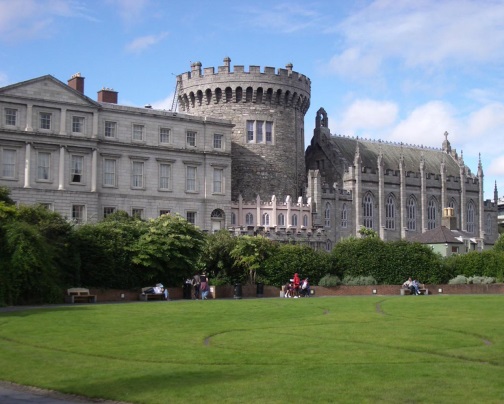


Students (- 26 years old): 90 euro
Party/Dinner on Saturday evening: 50 euro

Congress Time: Saturday 9am – 6pm / Sunday 9am – 3pm.
|
New Lacanian School
Désinscription: envoyez un message à : nls-messager-unsubscribe@amp-nls.org
Nous contacter: nls-messager-help@amp-nls.org
Nouvelle inscription: https://amp-nls.org/page/fr/42/sinscrire-nls-messager
| Le site de la NLS www.amp-nls.org |
|
New Lacanian School
Unsubscribe by sending a message to:nls-messager-unsubscribe@amp-nls.org Enquiries: nls-messager-help@amp-nls.org
New registration: https://amp-nls.org/page/gb/42/sinscrire-nls-messager
| The website of the NLS www.amp-nls.org |
|


|
New Lacanian School Nous contacter: nls-messager-help@amp-nls.org Nouvelle inscription: https://amp-nls.org/page/fr/42/sinscrire-nls-messager | Le site de la NLS www.amp-nls.org | |
New Lacanian School New registration: https://amp-nls.org/page/gb/42/sinscrire-nls-messager | The website of the NLS www.amp-nls.org | |

“an Seisiún” Irish Social Event of the NLS / Soirée Irlandaise de la NLS

DON’T MISS OUT ON “an Seisiún” Irish Social Event of the NLS – BOOK NOW (Limited places!)
Special dietary requirements? LET US KNOW NOW: ceciliasaviotti@gmail.com
À NE PAS MANQUER “an Seisiún” Soirée Irlandaise de la NLS – Réservez maintenant (nombre de places limité !)
Régime alimentaire spécial ? DITES LE NOUS MAINTENANT : ceciliasaviotti@gmail.com

|
New Lacanian School Nous contacter: nls-messager-help@amp-nls.org Nouvelle inscription: https://amp-nls.org/page/fr/42/sinscrire-nls-messager | Le site de la NLS www.amp-nls.org | |
New Lacanian School New registration: https://amp-nls.org/page/gb/42/sinscrire-nls-messager | The website of the NLS www.amp-nls.org | |


|
New Lacanian School envoyez un message à : Nous contacter: nls-messager-help@amp-nls.org Nouvelle inscription: https://amp-nls.org/page/fr/42/sinscrire-nls-messager | |
New Lacanian School by sending a message New registration: https://amp-nls.org/page/gb/42/sinscrire-nls-messager | The website of |

(…)
L’aliénation est ici radicale, elle n’est pas liée à un signifié néantisant, comme dans un certain mode de relation rivalitaire avec le père, mais à un anéantissement du signifiant. Cette véritable dépossession primitive du signifiant, il faudra que le sujet en porte la charge et en assume la compensation (…) dans sa vie, par une série d’identifications purement conformistes à des personnages qui lui donneront le sentiment de ce qu’il faut faire pour être un homme. »
In Quarto 94-95, janvier 2009, p. 47.
Extraits par Anne Béraud
|
New Lacanian School Nous contacter: nls-messager-help@amp-nls.org Nouvelle inscription: https://amp-nls.org/page/fr/42/sinscrire-nls-messager | Le site de la NLS www.amp-nls.org | |
New Lacanian School New registration: https://amp-nls.org/page/gb/42/sinscrire-nls-messager | The website of the NLS www.amp-nls.org | |
|

 Eight hundred WAP members and six hundred and fifty not members are being expected. Wristbands of different colors will be distribute at signing in time. To identify and block hotel guests or others in our space we shall be using colored wristbands that will be received with your credentials at the signing in bureau. We shall use no badges.
 We do expect this special admission to be understood since members, all round the world in fact, are lacanian orientation sustainers very directly with their clinical effort, as well as political and episthemical effort. They are those who find in this Congress their biggest moment of meeting and working.
 The 10th Congress accreditation will start Sunday, 24/4, at the Sofitel foyer and shall go on until Monday 25/4, between 7:00 am and 17:00 pm.


|


|
New Lacanian School envoyez un message à Nous contacter: nls-messager-help@amp-nls.org Nouvelle inscription: https://amp-nls.org/page/fr/42/sinscrire-nls-messager | |
New Lacanian School by sending a message New registration: https://amp-nls.org/page/gb/42/sinscrire-nls-messager | The website of |


– 19 –
Ordinary Psychosis and Melancholia
Natalie Wülfing
Great Britain
No other clinical picture resembles more the features of subjectivity that have entered our common discourse as “ordinary” – like sadness, depression, lethargy, defeatism, etc. – than melancholia. In La Psychose Ordinaire, (La Convention d’Antibes, Seuil 2005), one of the contributions turns around this question. Melancholia resembles ‘normality’, and if we are speaking about what discreet signs in Ordinary Psychosis we can illuminate, the discreetest, most difficult to differentiate, of signs must be those of melancholia.
Let us bring out the central idea that Jacques-Alain Miller (in Psychoanalytical Notebooks 26, Ordinary Psychosis Revisited), has singled out from amongst Lacan’s classic teaching, and relate it to the question of the clinical picture of melancholia. The idea of “a disturbance that occurred at the inmost juncture of the subject’s sense of life” (Ecrits, p.466 [fr 558]), in a way, circumscribes the melancholic’s position, in a structure stripped to a minimum. What is a disturbance of the sense of life? It is the absence of something vital, but the status of this something vital is the important psychoanalytic contribution as such – for it is not an organic vitality, the vitality of the organism, but the feeling of being alive that the Name of the Father instils in the subject. In the absence of this function, the signifier returns in the real – however in melancholia, it is not the signifier, but jouissance – what is rejected in language – that returns in the real. The foreclosure of the Name of the Father lays bare the relationship to the Thing. (Laurent, Ornicar 47) It is the being of the subject itself, as object, that turns against itself. This marks its specificity and difference to the paranoid or schizophrenic clinic.
What is this jouissance that returns in the real? Eric Laurent refers to mania when he says “The manic disorder can be grasped like a return in the real of the mortification that language imposes on the living.” It means that in melancholia and in mania as its counterpart, what is not mortified in the Other, mortifies the subject. It returns in the real as a jouissance linked to the being of waste. Lacan says it in a development prior to any formula: “That [the meIancholic’s suicide] occurs so often at the window, is not by chance. It marks a recourse to a structure that is none other than a fantasy.” (Sem X, p.336 [3.7.’63]) This recourse to a fantasy is not the neurotic fantasy, but the structure of being in the place of object a. It is not the object of the cause of desire, but the object of exclusion, the Thing, that the melancholic is always in danger of being identified with. It marks “…[the] sudden moment at which the subject is brought into relation with what he is as a.” (Sem X, p, 110 [16.1.’63])
In today’s world, where the object is at the zenith of the social, what is rejected from language is precisely returned into commerce, technology and addictive circuits that surround us. It thus functions as a great generalisation, this object a at the zenith. Does it mean that melancholia, and the precision of the other psychiatric clinics of psychosis, are all disappearing into this generalisation?
If it is possible, what are the discreet signs of melancholia, that it is to isolate, to distinguish them from other clinics of psychosis? There is always of course the self-reproach, that Freud already singled out. “The self-tormenting in melancholia, which is without doubt enjoyable, signifies [ ] a satisfaction of trends of sadism and hate, which relate to an object, and which have been turned round upon the subject’s own self.” (Mourning and Melancholia, 1917)
The turning on itself is shown, by Freud, to be a consequence of the loss of ego: “Thus the shadow of the object fell upon the ego, and the latter could henceforth be judged by a special agency, as though it were an object, the forsaken object. In this way an object-loss was transformed into an ego-loss and the conflict between the ego and the loved person into a cleavage between the critical activity of the ego and the ego as altered by identification.” (ibid)
The self reproach can also appear in more discreet forms though, such as a heightened sensitivity to the perceived criticism of others. This sensitivity is sometimes part of a more perplexed relationship to language, when the words of the other become difficult to assimilate and leave a residue in which a whole day or several days are spent going over what was said and what it might mean. Here the idea of language as parasitic, as jouissance itself, refers us to the late Lacan. (Seminar XXIII, The Sinthome) The parasite of language in the speaking being may play itself out at the level of persecution (question of the Other), of fragmentation (question of the body) or of a radical rejection (question of being), to evoke the three ‘externalities’ that Jacques-Alain Miller separated to distinguish between different psychotic substructures. (OP Revisited, PN 26)
It seems to me that mourning has disappeared from the melancholic clinical picture. What is left is the radical impossibility of shifting the certainty that everything is in vain. Nothing to be gained from the Other. Freud (somehow cruelly) in fact thought that the melancholic had an uncharacteristic access to the truth, in his self reproaches, which separated him from ordinary human beings who did not have such lucidity. It would cast him as a non-dupe. Thankfully, with Lacan, we think that the non-dupe errs…
Students (- 26 years old): 90 euro
Party/Dinner on Saturday evening: 50 euro

Congress Time: Saturday 9am – 6pm / Sunday 9am – 3pm.
|
New Lacanian School Nous contacter: nls-messager-help@amp-nls.org Nouvelle inscription: https://amp-nls.org/page/fr/42/sinscrire-nls-messager | Le site de la NLS www.amp-nls.org | |
New Lacanian School New registration: https://amp-nls.org/page/gb/42/sinscrire-nls-messager | The website of the NLS www.amp-nls.org | |