
Members Directory of the Regions of the EuroFederation of Psychoanalysis
The School is the institution created by Dr. Jacques Lacan to promote the transmission of psychoanalysis and the training of psychoanalysts. Jacques-Alain Miller followed up on this orientation when he suggested that the WAP be structured in the same way; the WAP in Europe brings together l’École de la Cause freudienne (ECF) in France and Belgium, l’Escuela Lacaniana de Psicoanálisis (ELP) in Spain, the Scuola Lacaniana di Psicoanalisi (SLP) in Italy and the New Lacanian School (NLS), grouped in a Federation (FEEP and subsequently the EFP). The titles of AMS (Analyst Member of the School) and AS (Analyst of the School) testify to the training required from the psychoanalysts who are members of these Schools. The AS has demonstrated before a panel of psychoanalysts, – in a procedure named by Lacan as The Pass -, the outcome of his or her own analysis.
These four Schools are active within the Freudian Field in 19 countries: Albania, Germany, Belgium, Bulgaria, Denmark, Spain, France, Greece, Ireland, Israel, Italy, The Netherlands, Poland, Portugal, The United Kingdom, Russia, Switzerland, The Czech Republic and the Ukraine. More than 2000 practitioners are registered within the local associations, which promote the study of psychoanalysis in keeping with their orientation.
A large number of practitioners who subscribe to the EuroFederation of Psychoanalysis, whether or not they are members of one of the Schools, work as psychiatrists, psychologists, social workers, educators etc., in hospitals and other institutions within the fields of social work and mental health. They are responsible for many initiatives across Europe, in Psychoanalytic Centres for Consultation and Treatment (CPCT), where free or low cost services are offered. They also contribute to the knowledge of psychoanalysis by supporting groups researching current social issues and by training practitioners to exercise psychoanalysis in the social sphere.
This directory testifies to this diversity and its geographical distribution throughout the wider European area, insofar as it is considered not just as a political or geographic community, but as a list of 59 regions and 79 sub-regions where a psychoanalytic community is active. The directory highlights the presence of a regional representation for each and every one of these areas. This is the third edition of the directory, updated on an ongoing basis, a copy of which you will receive at the Congress of the EFP (PIPOL7) 2015 in Brussels.
Jean-Daniel Matet
President of the EFP
Traduction : Raphael Montague and France Jaigu
|
|
|

Newsletter


|
New Lacanian School Nous contacter: nls-messager-help@amp-nls.org Nouvelle inscription: https://amp-nls.org/page/fr/42/sinscrire-nls-messager | Le site de la NLS www.amp-nls.org | | Agenda en ligne – Cliquez ici |
New Lacanian School New registration: https://amp-nls.org/page/gb/42/sinscrire-nls-messager | The website of the NLS www.amp-nls.org | | On-line calendar – Click here |


A few words about PIPOL 7
JEAN-DANIEL MATET
The testimony of AE shows us how
analysis allows us to extract ourselves from a position of
victim, from our
symptoms, from our fantasy, from our story.
But the actual word victim is not
part of the technical vocabulary of psychoanalysis, this is
why we have chosen
it, as its usage is being generalized to fight psychoanalysis
herself,
occasionally contested in its treatment of the effects of the
troumatisme, that the sexual real does
on the body and that often hides behind a complaint of
victimization. This
actual clinic will be the object of a thoughtful examination
during the
clinical days of PIPOL 7 on Saturday, 4th of July.
140 interventions
have been selected out of 260 that we have received to allow
us to debate, in
the five languages of the Congress, on those clinical
questions. Around twenty
Italian contributions in rooms where Italian, Spanish and
French will be
spoken. One or the other or one and the other.
In contrast with this clinical work,
Sunday has in store many great surprises and I deeply thank
Gil Caroz to support the elaboration of the
day to confront us to the real of the victim such as,
unfortunately, the 2015
news has given us numerous examples : after the attacks of
Toulouse, the
attack of the Jewish museum in Brussels in 2014, the slaughter
of Charlie
Hebdo, of the kosher supermarket and finally the museum in
Tunis. Already at
the Congress of the NLS in Geneva, the moments of crisis gave
the opportunity
to talk about it but in Brussels, conversations, testimonies,
exchanges promise
to be incandescent because we are not withdrawing in front of
this real, which
is assaulting us. Such an unseen crowd, in France, in January,
during the massive
demonstrations, which is not enough to bring answers and the
analytical
discourse, in confrontation with other discourses, is facing a
demanding ethic
to say something about it that touches the question of the
sacred, the
blasphemy, religious, jouissance, racism, anti-semitism in our
European
societies that are still a haven of peace sought by numerous
migrants ready to
loose their life to reach it. Italy knows something about it.
The Islamic
reference within the claims of the Parisian killers will bring
us, in Brussels,
to exchange with witnesses at the heart of these attacks, with
specialists of
Islam and we will have the opportunity to update our
discourse, which could hopefully
bring light on who draws the contemporary horizon of our
fellow citizen. You
have seen on the web some revealed surprises, there will be
others. There is
already close to 1200 subscribers. I deeply encourage you to
subscribe and the
efforts of our inhabitants of Brussels to welcome us will not
leave us
indifferent, if only by the incredible and original venue of
Saturday night,
where new social and cultural connections are knitting
themselves in Brussels.
the play
of Claudel, major reference of Lacan in the Seminar The
Transfer, is a unique
event on its own, even the palace of Congress of Brussels has
never seen this.
In that case, we expect many of you, PIPOL is the encounter of
psychoanalysis
in Europe to not miss.
|
New Lacanian School Nous contacter: nls-messager-help@amp-nls.org Nouvelle inscription: https://amp-nls.org/page/fr/42/sinscrire-nls-messager | Le site de la NLS www.amp-nls.org | | Agenda en ligne – Cliquez ici |
New Lacanian School New registration: https://amp-nls.org/page/gb/42/sinscrire-nls-messager | The website of the NLS www.amp-nls.org | | On-line calendar – Click here |

des Sociétés et Groupes de la NLS
Societies and Groups of the NLS
Towards PIPOL 7 Congress:
Victim-Victticism
Discussion with Giep-NLS members
Discussants: Khalil Sbeit, Yotvat Elbertbaum, Ilana Harari, Ilana Vogel-Valk

|
New Nous contacter: nls-messager-help@amp-nls.org Nouvelle inscription: https://amp-nls.org/page/fr/42/sinscrire-nls-messager | Le site de la NLS www.amp-nls.org | | Agenda en ligne – Cliquez ici |
New New registration: https://amp-nls.org/page/gb/42/sinscrire-nls-messager | The website of the NLS www.amp-nls.org | | On-line calendar – Click |

Study-Day: “Crisis and Creation” – On patchwork, repairs, inventions and art.
Els Van Compernolle
On the 20th of March 2015, the Kring voor Psychoanalyse van de New Lacanian School, the Dutch speaking society for psychoanalysis of the NLS, held a study day entitled: “Crisis and Creation”. Crisis for a speaking being who addresses an analyst, trauma as crisis, crisis in the health care sector, crisis and literature… the study day was built around these axes, illustrating again and again the specificity of psychoanalysis in its response to ‘crisis’.
In her introduction to the study day, Lieve Billiet, president of the Kring voor Psychoanalyse, situated the theme “Crisis and Creation” right away as belonging to the human condition: the fundamental impossibility to reconcile the symbolic, the imaginary and the real, forces the speaking being into making a “patchwork” in order to knot these various registers. Because the speaking being has to make do with symptomatic solutions and fantasmatic constructions in order to handle the insisting real, he/she is therefore prone to crisis. Lieve Billiet was referring to the image chosen for the poster of the study day, representing a piece by the artist Nina Katchadourian: a “restored” web of a spider, a metaphor for the ever renewed attempt to knot the three registers. Like the spider, the speaking being has to turn to repairs and creations, and more specifically: to his own repairs and creations. For this, psychoanalysis has faith in the subject itself, the treatment of the speaking being is in essence a treatment by the speaking being itself; the analyst can hereby function as a partner, a witness, an address.
‘Crisis’ is not a psychoanalytical concept. It is foremost a signifier of the “big Other”. Yves Vanderveken, President of the New Lacanian School, clarified that psychoanalysis as a subjective experience, is not disconnected from the surrounding world and that a moment of crisis does require a response from the analyst. Crisis is of deep concern to psychoanalysis. It requires from psychoanalysis an interpretation of the signifier ‘crisis’. In fact, this signifier touches upon various psychoanalytical concepts. However psychoanalysis cannot merely treat ‘crisis’. Psychoanalysis is a clinic under transference, which is the condition necessary to ‘subjectify’ any crisis, in order to transform it into an ‘effect of a symptom’. Yves Vanderveken concluded with the hypothesis that the title of this study day, “Crisis and Creation”, revealed something of the relationship between ‘crisis’ and psychoanalysis in Flanders. Crisis as a moment in which one is caught but also a moment to seize. By setting up this study day, the Kring voor Psychoanalyse contributes to formation and teaching, generating effects in the Flemish field of the health care sector. Moreover, with this study day, the Kring voor psychoanalyse was part of the work in progress of the NLS, that will result in the Congress of the NLS on the 9th and 10th of May in Geneva, bearing the title, ‘Moments of Crisis’.
Four clinical vignettes were discussed in the morning, giving us an idea of what crisis may represent for each individual and how psychoanalysis can contribute to the ‘repairs’. The case brought to us by Vic Everaert illustrated that in the field of drug treatment, psychoanalysis does not hold the ideal of complete abstinence as a solution for every subject, but rather points at the necessity of analyzing the function that the addiction has for each individual subject. Glenn Strubbe’s case pointed out how the orientation to the ‘letter’ gave direction to the work with psychotic subjects. The case developed by Charlotte Luyckx described how a psychotic man was confronted with a crisis the moment his mastership of language was taken from him. The treatment in the institution helped him to reinstall the inventions that worked for him. Psychosis teaches us the dimension of pure trauma, how the body is struck by language, which brings the subject in a state of permanent crisis. Contradictory to psychosis, in the case of neurosis trauma is caught in the fantasy, or transformed into a novel. The case of Luc Vander Vennet, from his private practice, shows that psychoanalysis is not based on a linear relationship between cause and effect. Beyond victimology producing a victim, the analytical situation implicates the presence of a subject.
The cure which was presented here, has not been carried to its end yet, but is still witness to the multiple ways one can make use of an analyst, enabling this subject to take some decisions that were previously inconceivable. Nathalie Laceur and Geert Hoornaert moderated the interventions.
The afternoon started with an interview between Stijn Vanheule and Lieve Billiet, who translated together with Els Van Compernolle, the book Le désir foudroyé (Crushed desire), Verpletterd verlangen, by Sonia Chiriaco. The interview clarified the intrinsic bond that exists between trauma and psychoanalysis. It shows us furthermore how Lacan’s theory helps us to understand trauma as the very point at which the symbolic and the imaginary are no longer able to knot with the real, which requires the subject to make some ‘patchwork’, ‘to work on it or with it’ (bewerken) – in contradiction to the old Freudian notion of ‘to work through it, to process’ (verwerken). Sometimes an analyst chooses not to work on the trauma, but only to border, to edge the hole, to construct something around the actual symptom, in the case of a subject that does not have the fantasy functioning as a support. The interview mentioned these notions among others. The enthusiasm showed by Lieve Billiet when she presented the book, no doubt contributed to stir the curiosity of those who had not yet read it.
Then Lieven Jonckheere gave us a lecture about the ongoing crisis in the field of mental health care, and how it is maintained. According to L. Jonckheere, the DSM-IV had proclaimed four psychological problems as being disorders of our ultra-modern times: depression, behavioral disorders, trauma and autism. The DSM-V has made a shift in each of these four disorders. The speaker illustrated that for each category, when a disorder occurs, the frequency increases in a spectacular way. Action then needs to be taken upon urgently, called ‘crisis management’ rather than ‘care’. Furthermore, psychoanalysis is considered as an obstruction, as not cooperating, causing an internal, permanent crisis in psychoanalysis itself, by the fact that psychoanalysis must react to all this. He called upon us to attend to the ‘weeds’ growing in the cracks of the DSM. Joost Demuynck went into this topic for a moment. He suspected that the next crisis will be about the ‘body’.
The moment many had been waiting for, finally had arrived: ‘A talk between Erik Mertens and Christophe Vekeman on the crisis called Marie’. Marie is the latest novel of this Flemish writer, poet and performer. During the interview, many aspects came forward, difficult to gather under one heading, but they all underlined the importance and function writing and language represent to this author. Particularly fascinating was the importance Vekeman gave to the formal aspect of language regardless of the meaning of the words: such as composition, lines and spelling. The author placed a strong emphasis on the importance of rhythm and of the voice as well. It is therefore not surprising that C. Vekeman is also a performer, as he illustrated by reading a passage he considered to be the most beautiful in the book Marie. His work seemed even more penetrating when read out loud. He added to this that every writer should try to invent his own voice. By this he confirmed what the analytical experience is also showing, that language does not only have the function of producing meaning and communication, but also carries a dimension of jouissance, which the writer is able to show in his work and performances.
Concluding a very inspiring day, Nathalie Laceur highlighted the argument of the next and 3rd congress of the Euro Federation of Psychoanalysis, PIPOL7, to be held on the 4th and 5th of July 2015 in Brussels, bearing the title: “Victim!”
Final reflection: What could be the effect of this kind of study day in Flanders? It is clear that the field of mental health care in Flanders is strongly characterized by a management-vision, in which evidence-based practices are considered to be almost the only valid ones and promoted as the only scientifically sound option for treatment of mental suffering, with, on the horizon, an ideal of offering treatments by protocol. The master’s discourse that characterizes these forms of psychotherapy, is the imperative of ‘care!’, ‘therapize!’, and aims at normalization and adaptation. Therapies endorsing this idea, aim at getting rid of the symptom and the real, both ‘outside-sense’ (hors-sens). This counters the ethics of psychoanalysis, an ethic of desire, singularity and of speaking well. The ethics of psychoanalysis does not aim at eradicating the absurd real, but aims rather at treating it, which calls for singular solutions, case by case. (MH Brousse, 2003).[1]
Whoever is trying to introduce this ethic and to safeguard it in his clinical work, whether in an institute, a center or private practice, acknowledges the effort it costs to do so.
Hence the great importance we give to creating transference in psychoanalysis. The initiatives taken by the Kring voor Psychoanalyse of the NLS, such as organizing this study day on “Crisis and Creation”, supporting the translation of the book by Sonia Chiriaco, and establishing the PPaK-Gent (the new initiative of offering formation which has recently started its activities), contribute to this goal.
Does psychoanalysis have a future in Flanders? The mere fact that so many people enrolled for this event today – clinicians, interested parties, students – testifies to the fact that, working in the clinical field, when confronted with a form of psychological suffering, one cannot and will not be satisfied with practices aiming at eradicating the real, and then psychoanalysis indeed has a future in Flanders.
Translated by Francine Danniau
[1] Brousse, M.-H. (2003). L’avenir de la thérapeutique, Quarto, 78, 15-21 (digital version).
|
New Lacanian School Nous contacter: nls-messager-help@amp-nls.org Nouvelle inscription: https://amp-nls.org/page/fr/42/sinscrire-nls-messager | Le site de la NLS www.amp-nls.org | | Agenda en ligne – Cliquez ici |
New Lacanian School New registration: https://amp-nls.org/page/gb/42/sinscrire-nls-messager | The website of the NLS www.amp-nls.org | | On-line calendar – Click here |
|
| |
| |
|
|

| | | |
| |
|
|
| | | |
| |
|
|
| | | |
| |
|
|
| | | |
| |
|
|

| | | |
| |
|
|
| | | |
| |
|
|
| | | |
| |
|
|

| | | |
| |
|
|
| | | |
| |
|
|

| | | |
| |
|
|
| | | |
| |
|
|

| | | |
| |
|
|
| | | |
| |
|
|

| | | |
| |
|
|
| | | |
| |
|
|

| | | |
| |
|
|
| | | |
| |
|
|

| | | |
| |
|
|
| | | |
| |
|
|

| | | |
| |
|
|
| | | |
| |
|
|
| | | |
| |
|
|
| | | |
| |
|
|
| | | |
| |
|
|
| | | |
| |
|
|

| | | |
| |
|
|


| | | |
| |
|
|
| | | |
| |
|
|
| | | |
| |
|
|

| | | |
| |
|
|
| | | |
| |
|
|

| | | |
| |
|
|

| | | |
| |
|
|

| | | |
| |
|
|
| | | |
| |
|
|
| | | |
| |
|
|
| | | |
| |
|
|
| | | |
| |
|
|
| | | |
| |
|
|


| | | |
| |
|
|
| |
|
|||||
|


Newsletter


|
New Nous contacter: nls-messager-help@amp-nls.org Nouvelle inscription: https://amp-nls.org/page/fr/42/sinscrire-nls-messager | Le site de la NLS www.amp-nls.org | | Agenda en ligne – Cliquez ici |
New New registration: https://amp-nls.org/page/gb/42/sinscrire-nls-messager | The website of the NLS www.amp-nls.org | | On-line calendar – Click |
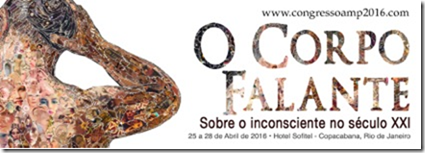
Dear Colleagues,
Our Xth Congress will begin
in exactly a year. The preparatory work follows its intense pace in EBP and in
Rio, but also in each school in its own way. The AMP Council, its Bureau and its
president, Miquel Bassols, keep up with such work giving it their full support
and essential orientation.
A whole structure is being carefully constructed to
receive and support the work towards Brazil next year. The Xth Congress website
has just been put on-line at www.congressoamp2016.com.
It is an open space specially
designed to welcome our ideas and inventions, It waits the data to come,
especially the next days, the practical ones, as for instance what we need to
make our inscriptions.
Skabô is the name of our newsletter, multilingual by birth as
well as its name and our site. Aside from the texts of orientation, each
author will be published only in its own language.
We invite each of you to
discover the site and to use it toward The Speaker Body: the unconscious in
the XXI century.
Um abraço,
Marcus André
Vieira
[10th WAP Congress
Director]
Chers
collègues,
À un an de notre Xème
Congrès, les travaux de préparation s’intensifient à l’EBP et à Rio, comme au
sein des différentes écoles, chacune dans sa particularité. Le Conseil de l’AMP,
son Président Miquel Bassols ainsi que son bureau, y apportent leur soutien et
leur orientation essentiels.
Nous mettons en place une
structure pour prendre soin de l’ensemble de notre élaboration vers Rio, mais
aussi pour vous y accueillir en avril 2016.
Le site du Congrès est désormais on-line :
www.congressoamp2016.com. Ce beau lieu de rencontre a été conçu dans ses
moindres détails pour recueillir et faire résonner nos idées, échanges et
inventions. Il évoluera au fur et à mesure de nos avancées, s’enrichissant de
nouvelles contributions et informations. Vous pourrez très prochainement vous
inscrire au Congrès sur le site web.
SKabô est le nom de notre bulletin. Il se veut multilingue
dès sa naissance, tout comme le site. Chaque auteur y sera publié dans sa langue
d’origine, à quelques exceptions près. Seuls les textes d’orientation seront
traduits dans les autres langues de l’AMP.
J’ai le plaisir de vous
inviter à les découvrir et à y participer.
Abraços,
Marcus André
Vieira
[Directeur du
Congrès]
|
New Nous contacter: nls-messager-help@amp-nls.org Nouvelle inscription: https://amp-nls.org/page/fr/42/sinscrire-nls-messager | Le site de la NLS www.amp-nls.org | | Agenda en ligne – Cliquez ici |
New New registration: https://amp-nls.org/page/gb/42/sinscrire-nls-messager | The website of the NLS www.amp-nls.org | | On-line calendar – Click |


Congress of the NLS – Congrès de la NLS
 @CrisisNLS
|
New Lacanian School Nous contacter: Nouvelle inscription: | Le site de la NLS | Agenda en ligne – |
New Lacanian New registration: | The website of | On-line calendar – |