
The
return of blasphemy
By
Jacques-Alain Miller
Translated
by Patrick Pouyaud
(en
français – http://www.lacanquotidien.fr/blog/wp-content/uploads/2015/01/LQ-452.pdf)
It
is said: ‘ they are barbarians. ‘ without doubt. However, this terrorism – there
is no blind, he has the eyes open, it is Targeted. It is also not mute. He
shouts: We have avenged the prophet mohammed! ‘
We
imagined at the end of the last century that concepts such as blasphemy,
sacrilege, sacrilege Were that the remains of the time spent. There is nothing.
We must find that the age of science has not done faint the meaning Of the
sacred ; that the sacred is not a archaism. Without doubt is – it nothing real.
It is a fact of speech, a fiction, but the one that makes hold together the
signs of A community, the cornerstone of his order symbolic. The sacred requires
reverence and respect. Otherwise it is chaos. Then socrates is invited to drink
hemlock. Nowhere, never, ever since he got men and who speak, it Was lawful to
everything.
Except
in psychoanalysis, very special experience, explosive, which is only in its
infancy . except in the united states, but freedom of speech guaranteed by the
constitution is there Bounded by a particular sense of decency. That is the way
that the vast majority of the press abstained from reproduce the mohammed
cartoons Out of respect for the ‘ great suffering ‘ muslims. Same principle for
the ‘ politically correct ‘. The affect painful pointed out that the libido is
at stake here. If the sacred is not real, enjoyment, there is a microcosm of,
it, the ‘ is. The sacred mobilizes ecstasies and wrath. We kill and die for him.
A psychoanalyst knows what is when we chatouille in others the ‘ impossible – to
– bear ‘ ( lacan ). That is why baudelaire quote bossuet, ‘ the wise do not itl
that in tremblant ‘, And assigns the comic an origin diabolical. Or, what was
the largest operator of lights, otherwise the laugh? Maistre speaks of the ‘
rictus ‘ of voltaire, musset of his ‘ hideous smile ‘. The doctrines of the
tradition were not refuted, note leo strauss, but hunted by the
laughter.
Charlie
hebdo was among us as the butte – witness to this derision founder. Cabu, charb,
tignoux, wolinski, were not promised to living with the knight of the Bar. Since
1825, no one has ever attempted in us to restore a blasphemy law . how are they
come to perish in martyrs of the freedom of the press? Is that of the universe
of speech once separated and seal, now communicate. They are even intertwined,
so that the sacred of one and the ‘ nothing sacred ‘ On the other are the
opposite. Except to rewind the film of modern times in deporting alien
everywhere, the subject – matter of life Or death – will be whether the taste of
laughter, the right to make a fool of, the Disrespect iconoclaste, are also key
to our way to enjoy that is the submission to the One in islamic
tradition.
As
to the legal debate, it is complex, and now works all the western democracies (
see In this regard the sum published there are three months by the university of
california, profane: Sacrilegious expression in a multicultural world ). Every
year since 1999, we are negotiating at the united nations on the subject,
Initiative of the organization of the islamic cooperation in germany, austria,
in ireland, Laws prohibit the violations of the sacred. The united kingdom
waited 2008 to stop protecting the church of england of blasphemy. France is
distinguished by the rigour of his doctrine secular. For how long? This is not
writing. Hey, france! Your coffee fout the camp. What do you want the most
really? Conflict or compromise?
New Nous contacter: nls-messager-help@amp-nls.org Nouvelle inscription: https://amp-nls.org/page/fr/42/sinscrire-nls-messager | Le site de la NLS www.amp-nls.org | | Agenda en ligne – Cliquez ici | New New registration: https://amp-nls.org/page/gb/42/sinscrire-nls-messager | The website of the NLS www.amp-nls.org | | On-line calendar – Click |

No. 58


|
New Lacanian School
Nous contacter: nls-messager-help@amp-nls.org
Nouvelle inscription:
| Le site de la NLS www.amp-nls.org |
| Agenda en ligne – Cliquez ici
|
New Lacanian School
New registration: https://amp-nls.org/page/gb/42/sinscrire-nls-messager
| The website of the NLS www.amp-nls.org
| On-line calendar – Click here |


Congress
of the NLS –
Congrès de la
NLS

: @CrisisNLS

|
New Nous contacter: nls-messager-help@amp-nls.org Nouvelle inscription: https://amp-nls.org/page/fr/42/sinscrire-nls-messager | Le site de la NLS www.amp-nls.org | Agenda en ligne – Cliquez ici |
New New registration: https://amp-nls.org/page/gb/42/sinscrire-nls-messager | The website of the NLS www.amp-nls.org | On-line calendar – Click here |

des Sociétés et Groupes de la NLS
Groups of the NLS
Society
of
the New
Lacanian
School
15
Years of the
Psychoanalytical
Notebooks
Saturday, 17 January 2015
10.30am – 1pm
Birkbeck University,
Malet Street, Room 538
A Seminar, celebrating 15 years of The
Psychoanalytical
Notebooks, a
publication of
the Lacanian
Orientation,
will focus on
the theme of
Issue 28,
published in
August 2014
“THE
CHILD”
with the participation of:
Alexandre Stevens
Psychoanalyst, AME, member of the ECF and
of
the NLS,
Director of Le
Courtil
Institute in
Brussels
and
Phil Dravers, Bogdan Wolf, Natalie Wulfing,
and Roger
Litten (Chair)
Former and current editors, psychoanalysts,
members of the
London Society
of the New
Lacanian
School.
Free
entry
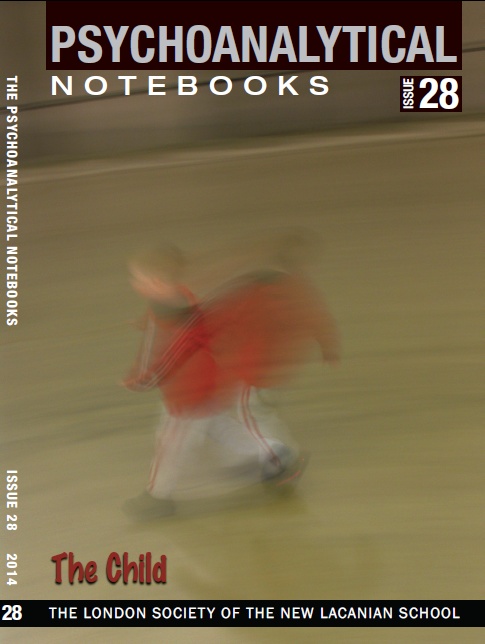
image: Vincent
Dachy
|
New Lacanian School Nous contacter: nls-messager-help@amp-nls.org Nouvelle | Le site de la NLS | Agenda en ligne – |
New Lacanian School New registration: https://amp-nls.org/page/gb/42/sinscrire-nls-messager | The website of the NLS www.amp-nls.org | On-line calendar – |
|
| |
| |
|
|

| | | |
| |
|
|
| | | |
| |
|
|
| | | |
| |
|
|
| | | |
| |
|
|
| | | |
| |
|
|
| | | |
| |
|
|
| | | |
| |
|
|
| | | |
| |
|
|
| | | |
| |
|
|


| | | |
| |
|
|
| | | |
| |
|
|


| | | |
| |
|
|
| | | |
| |
|
|
| | | |
| |
|
|
| | | |
| |
|
|
| | | |
| |
|
|
| | | |
| |
|
|

| | | |
| |
|
|
| | | |
| |
|
|


| | | |
| |
|
|
| | | |
| |
|
|
| | | |
| |
|
|
| | | |
| |
|
|

| | | |
| |
|
|
| | | |
| |
|
|

| | | |
| |
|
|
| | | |
| |
|
|
| | | |
| |
|
|

| | | |
| |
|
|
| | | |
| |
|
|

| | | |
| |
|
|

| | | |
| |
|
|

| | | |
| |
|
|
| | | |
| |
|
|
| | | |
| |
|
|
| | | |
| |
|
|
| | | |
| |
|
|
| | | |
| |
|
|


| | | |
| |
|
|
| |
|
|||||
|


PIPOL 7
CALL FOR
PAPERS!
3rd CONGRESS OF
THE EUROFEDERATION OF PSYCHOANALYSIS
4th and 5th JULY
2015
SQUARE – BRUSSELS
VICTIMS!
We can all become victims at any time.
Legal discourse provides a place for victims within
legal procedure, whilst political discourse or the
promise of reparation plays an increasingly large role
in direct relation to the ineffectual status to which
globalised liberalism is reducing our governments.
Whilst we naturally encounter sociologists,
historians, legal practitioners and doctors in the
course of our work, we have chosen to focus on what
clinical work teaches us when it is oriented by Lacanian
psychoanalysis.
The ten following themes shall serve as
guidelines for our work. Our introduction to the
Congress in five different languages has highlighted key
references that will be supplemented by bibliographical
research that is currently underway. We have chosen to
lay emphasis on clinical discourse, drawing attention to
the dialectic between symptom and phantasy at play in
each proposition in order to enable European
psychotherapists as well as psychoanalysts of the
Schools to take part in the congress.
Social issues that on occasion arouse
heated debate or trigger populist responses give rise to
the imaginary representation of “Victims!”, issues such
as European migration, border wars, humanitarianism,
pressure from the techno-sciences on reproduction and
gender, the threat posed by radical religious discourse,
the tension between private and public sectors, social
networks and internet. We will be addressing the
consequences of these issues, which should equally be
the object of your contributions.
The readability of cases will be our main
priority in order to demonstrate the pertinence and
validity of our interventions through reasoned
arguments.
1) War and peace: should I leave or should
I stay?
2) Pressure from the techno-sciences:
inhabiting or being hostage to one’s body
3) Medicalisation – psychiatrisation: a
means of protection or a menace
4) On rights and laws: the public sector
and the private sector
5) Education: the good and bad treatment of
children
6) The torturer and the victim: Sade or
Masoch
7) Heroism and sacrifice: gift or debt
8) Shame and exhibition: inhibition or
courage
9) An eye for an eye: complaint or
self-defence
10) Love, passion, the drive and desire:
what can I do about it?
Please send us your arguments for the
simultaneous discussion rooms by the 15th
March 2015. Preliminary arguments should not exceed 3000
characters. Final texts, once a selection has been made,
should reach us by the 30th May 2015. Please
send your arguments and texts by email to pipol7victime@gmail.com, including: PIPOL7INTERVENTION as the
title of your message. They may be written in the
language of your choice.
Jean-Daniel
Matet
Traduction Béatrice Khiara-Foxton
|
New Lacanian School Nous Nouvelle | Le site de | Agenda en ici |
New Lacanian School New registration: https://amp-nls.org/page/gb/42/sinscrire-nls-messager | The website of the NLS www.amp-nls.org | On-line |

Wishes from the NLS
meilleurs Vœux de la NLS
Lacan

|
New Nous contacter: nls-messager-help@amp-nls.org Nouvelle inscription: https://amp-nls.org/page/fr/42/sinscrire-nls-messager | Le site de la NLS www.amp-nls.org | | Agenda en ligne – Cliquez |
New New registration: https://amp-nls.org/page/gb/42/sinscrire-nls-messager | The website of the NLS www.amp-nls.org | | On-line calendar – Click |


ADMISSION
FREE
|
New Lacanian School Nous Nouvelle | Le site | Agenda ici |
New Lacanian School New registration: https://amp-nls.org/page/gb/42/sinscrire-nls-messager | The website of the NLS | On-line here |


Moments of Crisis in the Analytic Cure
Work in Progress Two
By Yves Vanderveken
Moments of Crisis in the Analytic Cure
Work-in-Progress Two
Yves Vanderveken
Clinical Study Day in Tel Aviv
I open this study day, which the executive committee of the NLS and the current Committee of the GIEP-NLS, working in collaboration, have decided will be a clinical Study Day of the New Lacanian School in Israel. We thought of it together in this way. This study day also opens the academic year of work of the GIEP-NLS. It will take place under the title: “Crisis in Times of Crisis”. It is oriented towards the theme of the next NLS Congress which will take place in Geneva on the 8th and 9th of May next year, under the title “Moments of Crisis”.
This opening address should not be too long, to leave room for the work.
We have texts that take up the theme of moments of crisis from every conceivable aspect: Gil Caroz’s paper, which serves to orient our work,1 and the one that I gave in Athens, under the title Work-in-Progress One.2 Today, I will single out one point in this opening. As it is a clinical study day, this will be a clinical point, a point concerning the clinic of psychoanalysis – and even, more precisely, concerning the direction of the analytic treatment.
To help us get our bearings in this theme of crisis – which is not, in itself, part of the psychoanalytic clinic as such – we have the definition given to it by Jacques-Alain Miller. Gill Caroz quoted it, and I will repeat it here: “There is a crisis in the psychoanalytic sense when discourse, words, figures, rites, routine, the whole symbolic apparatus, is suddenly found to be powerless in tempering an unruly real. A crisis is the real unchained, impossible to master”.3
The signifier “crisis” has acquired an extremely wide semantic range that extends to all discourses and all fields of knowledge and this definition allows us to read the crises produced in them on the basis of Lacanian concepts. Crisis thus appears as one of the names of the real for our time.
But this definition mainly allows us to orient ourselves with great precision in the moments of rupture that occur at a clinical level. Gil Caroz isolated them in the clinical structures that psychoanalysis holds dear.
In psychosis, in so far as it is characterised by these moments of crisis that take the form of triggering, decompensation or disconnection, there where the subject appeals to the symbolic to make sense of the encounter with a real, the only response is a hole. These moments of rupture are accompanied by clinical phenomena produced, to a greater of lesser degree, by the dissolution of symbolic and imaginary registers for the subject.
In the structure of perversion, these moments of rupture aim to produce a vacillation in and of the Other’s established symbolic codes, always in view of initiating the other into a new jouissance.
And finally, in neurosis, these moments of vacillation gives rise to the signal of the real that the irruption of anxiety indicates and weakens the fantasy construction which, up to that point, had given a framework for the real and allowed the subject to veil it defensively.
The psychoanalyst is crisis’s friend, first because he meets his analysands precisely in such moments of crisis, which are so many moments of entry into analysis. These always mark a moment of subjective emergency. At least, it is better if they do.
But the psychoanalyst is also the friend of crisis because, in a manner of speaking, he takes up the baton from it. In the case of the direction of the treatment in psychosis, it is a question of helping the subject to reweave something of the symbolic and imaginary registers and thus recreate a means of veiling a real that is too denuded. With regard to the direction of the treatment for neurosis, it is a question of isolating his mode of phantasmatic jouissance to a greater and greater degree, in so far as it is a response to the real.
So, in these different ways of directing the treatment, he takes up the baton, through his act. His act is one of interpretation, in so far as it disturbs and aims to produce a modification in the subject, by putting, let’s say, his mode of functioning “in crisis”. But it should be noted that this act of interpretation is based on very precise reference points, which are to be situated solely within the specific framework of the direction of an analytic treatment.
This is the point that I would like to insist upon today in opening this study day. In this respect, I cannot recommend strongly enough that you read Jacques-Alain Miller’s text, “Remarques sur le concept de passage à l’acte”.4
In this paper, he indicates the structural relationship between the concept of the analytic act and the psychiatric concept of the passage-to-the-act. The passage-to-the-act is both the pathological paradigm of crisis and, as we know, a way of bringing this crisis to a resolution. However, the fact that they are structurally linked does not mean that they are the same. By isolating what the two have in common, one can better distinguish what is specific to each. What’s at stake is the difference between the savage tearing of the fantasy caused by the traumatic intrusion of an inassimilable real, and what is “provoked” within the framework of the treatment that unveils the outline of the object.
What they have in common is that they both escape the dimension of the calculation, of mastery, which would imply that the act would be the result and the realisation of a thought whose rational end would be both useful and for the subject’s good. As paradigm of the act, the passage-to-the-act refutes this point by point. The suicidal act, which Lacan took as the paradigm for the successful act, comes as proof of the uselessness of such an approach, revealing, furthermore, that it goes against the subject’s good and aims to harm him to the very point of destroying his own being.
What is here demonstrated is the radical antinomy between thought and the act. The act is an exit, an extraction from the dimension of thought, in so far as the latter is rumination, incessant evaluation and infinite calculation never certain about what act to take. Thought is the obstacle, impediment to every act, as is ultimately shown by obsession, to take up our clinical categories, which seeks to find the final truth, which does not exist, in order to decide whether it is valid or not.
This essential dimension of opposition between thought and the act is something that Lacanian psychoanalysis holds dear. Lacan even takes a further step that goes to the very heart of psychoanalysis, by opposing the act and the unconscious! By making the Cartesian cogito – I think therefore I am – the structure of the subject of the unconscious, he indicates that the unconscious, in its transferential dimension of searching for truth through free association (thus the association of thoughts) is syntonic with repression. Here, thought nourishes the symptom with meaning. This is the reversal in the theory of the unconscious that he begins to develop from Seminar XI, The four Fundamental Concepts of Psychoanalysis.5 The act is situated from then on as a way out of the dimension of neurotic inhibition and of breaking the chain of thought.
Does this mean that psychoanalysis pushes one towards the act, or again toward a “realisation” of oneself, as is said in the jargon of psychotherapy, echoing the idea of “freedom” associated with it? Yes, and also obviously, no! The registers in which this operates must be rigorously distinguished.
If there is a structural identity between them in so far as the passage-to-the-act, the analytic act, and in fact, every dimension of the act, in that they imply a dimension of transgression, of crossing boundaries, of mutation, and are “delinquent” in so far as they break with the established codes of the subject and the Other, and that they mark a separation from the Other, it must be remembered that Lacan constantly identified the passage-to-the-act and acting out as a short-circuit of the very process of analysis. And this short circuit is produced exactly when something of an adequate interpretation, which is what the analytic act consists of, is found to be lacking.
This allows Jacques-Alain Miller to take a further step and specify that the paradigm of the suicidal act “returns in short-circuit6 to this central and at the same time excluded zone of the subjective world, to which Lacan gave the name jouissance”.7
It is precisely this zone that the treatment of a psychotic subject aims to coat and that the treatment of the neurotic aims at as such, but outside the dimension of the short-circuit which are modalities of crisis that one should try to avoid within the framework of the treatment. It is for this that Lacan establishes the concept of the analytic at. There where suicide is the successful act par excellence, psychoanalysis takes parapraxis [l’acte manqué] as its paradigm, in so far as the unconscious intercedes and diverts the action away from the initial intention, displacing the act in order to say… something else.
If psychoanalysis thus also aims at a way out of doubt, which is the essence of thought and of unconscious-truth, in order to attain a dimension of certainty, in what sense does it fit with the definition of crisis that Jacques-Alain Miller gives in psychoanalytic terms? If it is not in the register of acting-out so dear to the obsessional, to what order does this certainty refer.
What psychoanalysis provokes is not a real crisis, even if it produces real effects. As Jacques-Alain Miller tells us, “In the experience of a psychoanalysis, the analyst’s interpretation is needed for there to be a determination”.8 The term “determination” is rich in polysemy in French. In this case, it can mean both getting what pins something down in your being, what defines you if you wish, but also the index of a decision that brooks no hesitation. In so far as it aims “at the heart of being”,9 as he says, interpretation does not produce a very easy time of it for the analysand. To aim at the heart of being, it touches and unveils something of the subject’s object, the object that determines him – a bit of filth, as Lacan says. Such moments should be kept within the framework of the cure.10
These moments of treatment (and of crisis in the treatment) produce a way out of doubt by arriving, in some way, at a “That’s it!” that does not deceive. But here as well, to which order do they belong? It is always a matter of going beyond a signifying threshold, of going beyond a signifying scansion, which is produced by an act of saying and acts as a cut in the dimension of sense – as we try to learn from Lacan’s last teaching. It can produce a way out, or a separation from signifying alienation,11 which isolates a few signifiers outside meaning [hors–sens] that determine this excluded relation to the world of truth that the subject entertains with jouissance. These are so many singular and subjective points of rupture of the symbolic order proper to the subject, which break with, but do not make sense without his linguistic universe. He can thus finally attempt to make another use of it and develop, not its suppression, but a know-how to do with it [savoir-y-faire avec] and isolate a determination of a mode of jouissance that relates to the register of certainty, in so far as, on this basis, the subject will be able to position himself in relation to his choices, which will always, according to the progress of an analysis, be less and less free and refer more and more to the dialectic of the forced choice.
What is at stake is thus not that the analyst pushes the subject, for example, to make a decision,12 but that by analysing what determines him (which is what the function of the analyst is for) the subject should himself be in a position to answer for his choices!
I hope that these few remarks and simple distinctions will allow us to find our bearing in the work that we are going to pursue in relation to the clinical cases presented during this study day.
Tel Aviv, 1 November 2014.
Translated by Philip Dravers
1 G. Caroz, “Moments of Crisis”, Hurly-Burly 12 forthcoming, also: https://amp-nls.org/page/gb/170/the-congress.
2 Y. Vanderveken, “Moments of Crisis, Work-in-Progress I, Hurly-Burly 12, forthcoming; also available: https://amp-nls.org/page/gb/49/nls-messager/0/2014-2015/1626.
3 G. Caroz, op. cit.
4 J.-A. Miller, “Jacques Lacan: remarques sur son concept de passage à l’acte”, Mental, Paris, April (17) 2006, p. 22
5 J. Lacan, Seminar XI, The Four Fundamental Concepts of Psychoanalysis, trans. Alan Sheridan, London, Penguin, 1977.
6 My emphasis.
7 J.-A. Miller, ibid.
8 Ibid.
9 Ibid.
10 Gil Caroz unfolds the occurrences in his text.
11 To take up the conceptual opposition that Lacan develops in Seminar XI.
12 It is even in relation to this short-circuit and to avoid it in some way that Freud invented an analytical rule: that of the abstinence, advising the analysand to undertake nothing real during the time of the treatment. Obviously treatments have got longer, and not a little, its concern being something quite different.
Congress of the NLS – Congrès de la NLS
 : @CrisisNLS
|
New Lacanian School Nous contacter: nls-messager-help@amp-nls.org Nouvelle inscription: https://amp-nls.org/page/fr/42/sinscrire-nls-messager | Le site de la NLS www.amp-nls.org | | Agenda en ligne – Cliquez ici |
New Lacanian School New registration: https://amp-nls.org/page/gb/42/sinscrire-nls-messager | The website of the NLS www.amp-nls.org | | On-line calendar – Click here |
From: Florencia Fernandez Coria Shanahan <florenciashanahan@gmail.com>
Date: Tue, Dec 23, 2014 at 6:33 PM
Subject: 1203.en/ Newsletter RADIO LACAN No 56 [English-Français]
To: nls-messager@amp-nls.org

Newsletter


|
New Lacanian School
Nous contacter: nls-messager-help@amp-nls.org
Nouvelle inscription:
| Le site de la NLS www.amp-nls.org |
| Agenda en ligne – Cliquez ici
|
New Lacanian School
New registration: https://amp-nls.org/page/gb/42/sinscrire-nls-messager
| The website of the NLS www.amp-nls.org
| On-line calendar – Click here |