Program:
9:00-9:30 – Coffee and registration
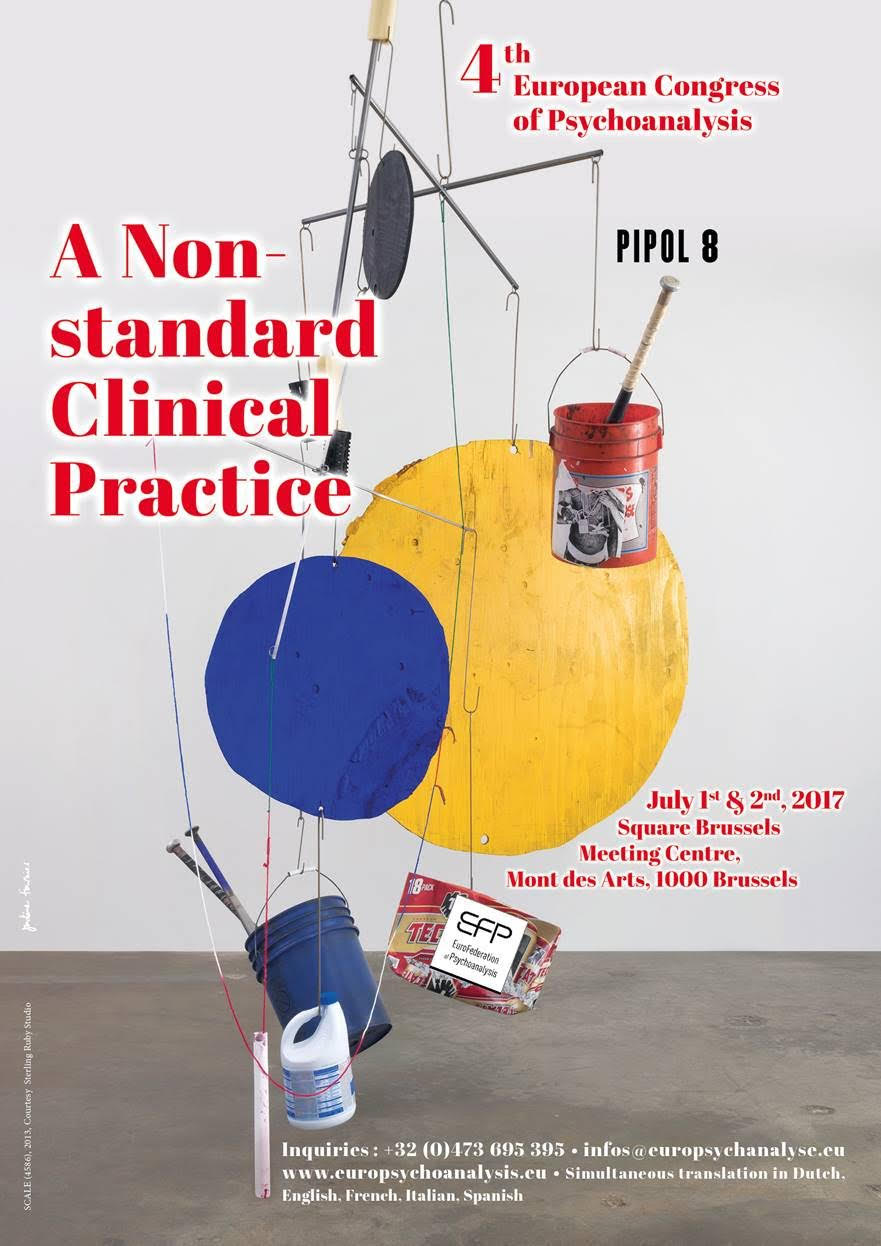
9:30-10:45—Conversations of the School : “From the Forced Invention to A Belief in the Symptom”
Six interventions:
Samuel Nemirowsky
Susana Huler
Mabel Graiver
Claudia Iddan
Perla Miglin
Sergio Myszkin
10:45-11:00 – Break
11:00-12:00— Discussion
Moderator: Samuel Nemirovsky
12:00-12:45 – Break and Refreshments
12:45-13:15—Clinical Cases
Marco Mauas: “Analyst Sinthome”
Assaf Vakning: “Do it Moves”
13:15-14:00 – Discussion
Moderator: Sharon Cohen-Zvili
14:00-14:30— Clinical Cases
Shlomo Lieber: “From an ‘Ordinary’ existence towards a Break”
Yulia Perelman: “The Sun Has Eyes”
14:30-15:15 – Discussion
Moderator: Tamar Gerstenhaber
Bialik 26 Tel Aviv

REPORT ON ICLO-NLS OPEN SEMINAR
Dublin, 20th October 2012
On Saturday 20th October, ICLO-NLS held the first of its two open seminars for this year on Lacan and the Arts. The title of this event was “All Our Fathers: Literature and Psychoanalysis in Dialogue” with Carlo Gébler. The event was held in the Dublin Writers Museum and it was very well attended with many people participating in the dialogue. Indeed these open seminars have been specifically organised qua structure and content with the larger public in mind.
Florencia Shanahan (chair of ICLO-NLS) opened the seminar. She began by asking the question what psychoanalysis can learn from the artist. She explained that based on Freud and Lacan it is indeed important to ask the question what psychoanalysis can learn from the artist rather than how psychoanalysis can be applied to art. In introducing the day as an exploration of the functions of the father and of writing, she quoted J-A Miller on ‘reading one’s own unconscious’: “…that book of which only one copy has been printed, whose virtual text you carry everywhere with you and where the script of your life is written, or at least its rough draft”. She thanked the artist Clodagh Kelly for providing the painting for the poster.
Then the writer Carlo Gébler spoke about his life, his work, his relationships with his parents, more especially his father. He spoke for well over an hour. His was a dazzling performance that fascinated everyone in the audience. Particularly outstanding was his openness about his experiences and his vulnerabilities. He said that his writing had a lot to do with being recognized by his father; he wrote for his father. Carlo had been introduced by the psychoanalyst and Trinity College scholar (emeritus) Ross Skelton. After Carlo’s enthralling talk Ross conducted a brief interview with him dealing with such questions as the relationship between analysis and writing. After this interview a lively conversation took place between Carlo and the audience. In this conversation what was explored, amongst many other things, was the question of writing as a form of therapy. Carlo had mentioned that he had been in analysis and made the point that for him writing was very much of therapeutic value, as he called it.
After the coffee break everyone returned for a session called “Psychoanalytic Perspectives on the Father”. This section of the seminar was chaired by Lorna Kernan. Three ICLO members presented papers on the question of the father. Claire Hawkes presented an overview of Freud’s ideas on the topic, whereby she especially concentrated on The Oedipus Complex, Totem and Taboo and the Father from Moses and Monotheism. She finished her paper by referring to Irish writer Frank O’Connor’s beautiful short story “My Oedipus Complex”. The second paper in this section was presented by Joanne Conway. She spoke Lacan’s perspective on the crucial problem of the father. She argued that there is still an element of anatomical/biological reductionism involved in the Freudian conceptions of the father. Rather than considering the real protagonists Lacan emphasized the structure that is at stake in the question of the father, at least that was the case of the Lacan of the 1950’s with his emphasis on the Name-of –the-Father and the paternal metaphor. She said that in terms of the drives the operation of the paternal metaphor imputes a mediating effect permitting other pathways the child can enjoy. However, she also mentioned that already as far back as 1938 Lacan was concerned about what he called then the degradation of the paternal imago; an idea that would be taken up by the third and last speaker Alan Rowan. He spoke about the changed idea and function of the father in modern society. He outlined a number of contemporary changes, such as mothers increasingly participating in work, single parent families and other socio/cultural/economic factors. In place of the paternal function we are nowadays talking about a parental function. He argued that the changed role of the father has consequences for the way we suffer. He also brought to our attention the crucial idea that “our question concerning fatherhood in the twenty first century cannot be separated from the question of the symbolic in the twenty first century”, i.e., we live in a globalised world and one the side effects of this is, as J-A Miller has pointed out, that the subject is today, more than before, without a compass. Towards the end of his presentation he said that it is in this context that we must pose the question of the nature of a fatherhood that can no longer rely on an ideal or grander narrative.
It was this last point that became the starting point of a lively discussion with the audience after Carlo Gébler and Ross Skelton had been invited back to the podium for a panel discussion with the presenters and the audience. Amongst the many themes that were discussed and debated was the idea of parenthood and the changed reality of what fathers and mothers are for – and how they relate to – their children. Questions were raised and debated as to how this related to feminism and even how the changed father-role could have possibly be one of the factors that contributed to the rise of fascism in the 20th century. I will leave the last word to Carlo Gébler: “If there is anything that determined me as a writer and as a person, it is the voices of my parents”.
Rik Loose (ICLO-NLS)
WORLD ASSOCIATION OF PSYCHOANALYSIS
NEWS FLASH!
Dear colleagues,
With great pleasure we inform you that since August 28th we have the volume that contains -in Spanish- the papers presented at the plenary sessions of the VIIIth WAP Congress, “The symbolic order in the 21st century. It’s not what it used to be. What consequences for the treatment?”, held in Buenos Aires fro 23rd to 27th April 2012.
Both its presentation and its contents reactualize the intense and fruitful work of our colleagues: “The pass”, “The analytic practice”, “The epoch”, “Subjectivities in the age of technoscience”, “The clinic”, are some of the titles you will find developed there,; and also, as closing, the presentation by Jacques-Alain Miller of the theme of the next Congress to be held in Paris, orientating once again the pathway for the next two years.
The WAP will soon undertake and encourage the publication of this volume in the other languages of the School One.
Buenos Aires, 31th August 2012.
Flory Kruger Leonardo Gorostiza
VIIIth Congress Director WAP President
_________________________________________________

Lacan Circle of Melbourne
Seminar on Fundamental Texts
Wednesday 12 September, 7.30pm – 9.00pm
1888 Building, University of Melbourne, Grattan Street, Carlton
Jacques Lacan, Seminar 19, . . . or worse (1971-1972)
The Seminar on Fundamental Texts recommences this Wednesday, when we embark on a detailed study of Lacan’s, Seminar 19, … or worse (1971-1972). All interested in studying psychoanalysis in the Lacanian Orientation are welcome to attend. If you would like to participate but are unable to attend the first meeting this Wednesday, please contact me.
This seminar chants the disharmony of the sexes. Lacan’s now-famous theorem, “There is no sexual relationship”, finds its origin in this seminar in the discussion of modal logic, the logic of contingency; in the place of a gap in the symbolic, there are myriad seductive images, prescriptive discourses, recommendations for achieving wellbeing —all just so many semblants whose inadequacies psychoanalysis exposed over the course of the 20th century. Marriage a natural alliance? Sex a natural attraction between man and woman? What fictions have to be maintained in order for such longstanding cultural reference points to be upheld? And what ensues when they are disturbed? Will things be better . . . or worse?
The thesis, “There is some One”, “Il y a de l’Un”, discretely introduced in this seminar, raises the question of the solipsism of the subject’s jouissance. This is the start of Lacan’s final years of teaching, in which everything is both the same and different, where everything seems to be turned upside down, renewed and recast in many new ways. Whereas Lacan had previously upheld the primacy of the Other in relation to truth and desire, here he speaks of the primacy of the One in the dimension of the real. He downplays desire and stresses jouissance, insisting on the inexistence of the Other, stressing its fictional nature. (See JA Miller’s “Note” on the seminar.)
The French edition of the seminar is available from Amazon.fr, the Gallagher translation from the usual sources, and a recent translation of a series of talks Lacan gave at Sainte Anne Hospital the same year will be made available.
This text of Lacan’s is an ideal place to start for anyone interested in exploring his later teaching. Contact me if you are new to this seminar on fundamental texts and would like to participate.
Russell Grigg
KNOTTINGS 2012-2013
Psychoanalysis and the Psychotic Subject
From Forced Invention to Belief in the Symptom
Concept of ‘Knottings
The ‘Knottings’ Seminar of the NLS, has the function –as its name suggests- of weaving the working ties within the whole of the School, in a combinatory way that pierces bilateral ties. Organised by the Executive Committee of the NLS, it brings together colleagues from the 5 Societies, plus the Polish groups. The axis of the Knottings is the Congress of the School, which this year will take place in Athens on 18 and 19 May 2013.
The Knottings allow other voices of psychoanalysis in the Lacanian way–which is one-, to be heard. Their richness lies in this confrontation of languages at the heart of the most heterogeneous of the Schools of the WAP. This diversity is homologous to our object’s matter itself.
The title, the argument, the bibliography, Eric Laurent’s intervention in Tel-Aviv, are to be published to the rhythm of the preparation of the Congress theme, in a continuous work-in-progress. Circulated via NLS-Messager, they will be published on the NLS website: https://amp-nls.org. The website, which is undergoing complete renovation, will offer new tools for this work.
In each location, three papers will be presented and discussed: a theoretical introduction by a member of the Executive Committee, two clinical presentations, by one member of the local group and by a guest from another group. The President of the local group is responsible for chairing and reporting.
Programme
You will find below the programme for the next three ‘Knottings’ seminars. The programme for the other Knottings seminars scheduled for 2013 will be announced later.
For the Executive Committee of the NLS
Dominique Holvoet and Nathalie Laceur
15.09.2012 – ASREEP-NLS
Location: Geneva
Introduction: Dominique Holvoet (EC)
Clinical Cases: Lieve Billiet (Kring voor Psychoanalyse van de NLS); Beatriz Premazzi (Asreep-NLS)
President: Renato Seidl
24.09.2011 – Hellenic Society of the NLS
Location: Athens
Introduction : Dominique Holvoet (EC)
Clinical Cases: Sharon Zvili (GIEP); Helene Molari (Hellenic Society)
President: Epaminondas Theodoridis
27.10. 2012 – Circle of Warsaw & Circle of Cracow
Location: Poznan
Introduction: Yves Vanderveken (EC)
Clinical Cases: Anna Pigkou (Hellenic Society); Alina Henzel-Korzeniewska (Circle of Cracow)
President: Grazyna Skibinska

For the EC
Dominique Holvoet
President of the NLS

Gil Caroz, President

“Let the facebook page of the “New Lacanian School” and its Twitter account be the resonance box of the work and activities of the various components of the young School founded by Jacques-Alain Miller 10 years ago. Nearly twenty groups from Europe and beyond (Israel, Quebec, Australia…) joined it to carry out a great work in progress of psychoanalysis, its foundations, its practice and its development, concerning the future of the world in the XXIst century. The New Lacanian School must be present in the century and will make a subtle and mind-blowing use of these tools!”
Dominique Holvoet – President of the NLS
Facebook: https://www.facebook.com/pages/New-Lacanian-School-NLS/108639619285801
Twitter: @AMP_NLS