“Guitrancourt Prologue”
by Jacques-Alain Miller
This text clarifies what the teaching provided by the Clinical Section is, and what it is not.
Nowhere in the world can one do a degree to become a psychoanalyst. And this is not by chance or through oversight, but for reasons regarding the essence of what psychoanalysis is.
One cannot imagine what a test to determine the ability of a psychoanalyst would be, as the practice of psychoanalysis is private and restricted to the most intimate confidences that a patient entrusts to an analyst. Let us acknowledge, however, that the analyst responds by an operation — interpretation — that concerns what is called the unconscious. Couldn’t this operation form the basis for a test, especially since interpretation in not the privilege of psychoanalysis? Any criticism of texts, documents or writing employs it as well. But the Freudian unconscious is only constituted in relation to the word I have spoken, cannot be confirmed without it and psychoanalytic interpretation is not probative in itself, but rather by the unforeseeable effects it has on the person who receives it and within the context of this very relationship. There’s no escaping it.
The result is that it is only the analysand who should be recognized as being able to attest to the abilities of the analyst, were his testimony not skewed by the effects of transference, which are established from the outset. This shows that the only acceptable testimony, the only one that can give some guarantee concerning the work that has been done, would be from an analysand after transference, but who still wishes to serve the cause of psychoanalysis.
What I call here the analysand’s testimony is the nucleus of the teaching of psychoanalysis insofar as it responds to the question of what can be communicated to the public of an essentially private experience.
Jacques Lacan established this testimony under the name of the pass (1967). To this teaching he gave his ideal, the matheme (1) (1974). A whole gradation exists between the two: testimony of the pass, still encumbered by the individual character of the subject, is confined to a small circle within the analytic group. Teaching on the basis of the matheme, which must be demonstrative, is for all, and that is where psychoanalysis meets the University.
This teaching has existed in France for fourteen years, and has made itself known in Belgium through the Freudian Field. Next January, it will take the form of the “Clinical Section”
It is important to state clearly what this teaching is and what it is not.
– It is academic; it is systematic and graduated; it is provided by qualified teachers; it is ratified by diplomas.
– It does not authorize one to practice psychoanalysis. Freud’s imperative that an analyst must be analyzed was not only confirmed by Lacan, but radicalized by his thesis that an analysis has no other end than the production of an analyst. In every case, transgression of this ethics carries a heavy price for the one who commits it.
– Whether in Paris, Brussels or Barcelona, whether these methods are public or private, the orientation is Lacanian. Those who receive it are defined as participants: this term is preferred to that of students because it highlights the high level of initiative given to them — the work they must complete will not be exacted from them. It depends on them; it will be guided and evaluated.
There is no paradox in stipulating that the strictest exigencies bear upon those who seek to take up a teaching function of an unprecedented kind within the Freudian Field, since knowledge (savoir), although it derives its authority from its coherence, only finds its truth in the unconscious, from a knowledge where there is no one to say “I know.” This means that we provide a teaching only provided that we support it with an unprecedented elaboration, however modest it may be.
We begin, in Spain as in Belgium, with the clinical part of this teaching.
The clinic is not a science, that is, a knowledge that can be demonstrated. It is an empirical knowledge, inseparable from the history of ideas. In teaching it, we not only compensate for the failures of a psychiatry, whose reliance on chemistry often causes it to neglect its classical treasure, we also introduce an element of certitude (the matheme of Hysteria).
The presentation of patients tomorrow will fill out this teaching. What is called in France the domain of “detailed study” [“études approfondies”] and which requires the writing of a doctoral dissertation will come later. In accordance with what in the past was under Lacan’s direction, we will proceed step-by-step.
Jacques-Alain Miller
15 August 1988
Translated by Ian Curtis
Reviewed by Philip Dravers
(1) From the Greek mathema, that which is learned.



London Society Programme 2013/2014
Our theme of work for this year is
CARTELS: We encourage everyone to work in cartels this term and if they choose to, to present some work at specially reserved times in the programme this academic year. Please contact the Bureau if your cartel would like to book into one of the available slots on 15 February or 5 April 2014.
The Programme:
Venue: ULU, Malet St
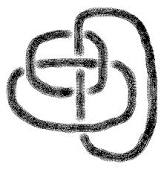
11th January 2014 – NLS Knottings Seminar
15th February 2014 – NLS-Seminar ‘What Cannot be Said’ (2 – 5pm)
15th March 2014 – Clinical Conversation [New Format] (11am – 1pm / 3pm – 5pm)
5th April 2014 – NLS-Seminar ‘What Cannot be Said’ (2 – 5pm)
14th June 2014 – Study Day: Psychoanalysis in 21st Century Culture (Science, Law, the Social)
Other Dates in our Calendar:
16/17 November 2013 – ECF Study Day (Paris)
14-18th April 2014 – WAP Congress (Paris)
17/18 May 2014 – NLS Congress (Ghent, Belgium)


Report on the ICLO-NLS screening of “Other Voices” with Ivan Ruiz
Dublin, 5th September 2013
The opening event of the ICLO-NLS 2013/2104 programme was a particularly auspicious moment, not solely in terms of the psychoanalytic community in Ireland, but for those in the English speaking world interested in hearing something of Psychoanalysis and Autism.
On the 5th of September, 2013 in association with the Instituto Cervantes Dublin, an open screening of the world premiere in English of the documentary Other Voices – A different outlook on Autism was held.
Those in attendance were joined by the film’s maker Ivan Ruiz who spoke frankly and engagingly about his film.
Chair of ICLO-NLS Florencia F.C. Shanahan opened proceedings introducing both the film and Ivan Ruiz. She stressed the importance of the film in engaging with the world of the subjects with autism, their families and psychoanalysis, but also in bringing to the fore the other often unspoken yet crucial dimensions that surround the clinic of autism, namely those of a political nature which drive the elements of diagnosis, method of treatment, resourcing and financial assistance.
Joanne Conway made a short address, noting the relevance of this documentary as a means to transmit something to someone – that is something about the position of psychoanalysis to support and uphold for each who undergo it, their idiosyncratic way of being in the world. She then introduced the formation of a Special Interest Group within ICLO-NLS pertaining to Child and Adolescent Psychoanalysis. This group comprises practitioners in the field – not solely from the Lacanian orientation – who seek to interrogate the challenges posed by this clinic.
After the viewing of the film a discussion with the audience took place. Ivan Ruiz spoke candidly about the making of this film, and his motivation to do so being drawn from both a personal experience of autism and psychoanalysis. Another motivation for him was the risk he perceived in society in terms of a change in the conception of what it means to be human – that is how the “subject” is more and more reduced to an ideology of statistical conceptions of what it is to be human. It is a risk for all subjects, but particularly for those with autism and that is why he wished, via the medium of this film, to reach a larger public. This film is a “response to this risk of our civilisation”. He stated he was not a filmmaker, which was disputed by one speaker from the audience – who spoke of the overwhelming and moving testimony of those who spoke, which as filmmaker he unobtrusively and respectfully conveyed.
The question of diagnosis was raised from the audience stressing that whilst psychoanalysis valorises singularity – a diagnosis can be “helpful”. Ruiz responded and stated that in the film, diagnosis is indeed important – and for psychoanalysis it is a means to orient a treatment – a treatment which does not erase the subject as for psychoanalysis each subject with autism is different. Ruiz noted that while we do not yet have a diagnosis for living – it is sure to be coming! Ruiz continued that The Autism does not exist – an Autism for all does not exist and that was an important message to transmit in the film, and so he purposefully did not include any autistic child in the film as there was a risk of creating an “image of autism”. This is not a film to show anything but “to hear something”. And yet each of the children named (by parents, grandparents and analysts) in the film is vitally present – as evidenced via another question from the audience.
An audience member was struck by intense desire articulated by those parents interviewed. Watching the film one is witness in part to the devastation, powerlessness and loss some parents experienced in being presented with a diagnosis of autism and with it a paucity of hope of anything beyond that for their child. But then there is a terrific turn in the piece whereupon an analyst speaking about her work with autistic children emphasises the particularity of each and the fact that each child has a name. The name of course being an ultimate signifier of the desire of the Other. After she speaks each parent in turn then introduces the viewer to their child via his or her name. As each parent names their child something amazing radiates from the screen. Smiles, laughter, love, a tidal wave of desire of each parent/grandparent for each child and their particular gifts and way of being. It is a visceral moment and a radical departure from the language spoken at the beginning of the documentary. It is palpable how psychoanalysis has supported both the singularity of the child and a treatment of the Other (parents) allowing for the creation/restoration of a radical and singular relationship. Ivan Ruiz commented on the dimension of desire in terms of autism as highlighted by the questioner – how in Lacanian psychoanalysis desire is usually only articulated in terms of the neurotic yet here we clearly see the place of desire for these subjects – one only has to listen to the young man Albert and his interest (among many) in Tin Tin – an interest of his father’s originally and one his paternal grandfather also supported/encouraged via his drawings. So something in terms of desire is transmitted and accepted to an extent by the subject. Ruiz noted that the effect of psychoanalysis here is to restore desire via the speech of the parents about each of their children.
What was also evidenced in the film was the particular demand on parents and analysts alike to invent a new clinic/treatment case by case. This approach encompasses vital work with parents and child toward the possibility of opening new pathways through which the parents (and others) may enter the world of the child.
Time was forever at our heels in this event and the discussion came to a close long before it was ever near ending. In closing Florencia thanked those in attendance with particular thanks to Ivan Ruiz, and noted that the questions of the evening pointed to some controversial points in the film equally for those who were psychoanalysts and those who are not, and perhaps point to those elements we each take on ourselves to understand.
The event was a great success, evidenced in the record numbers in attendance. This film is a testament to the lives of autistic subjects and their families. A testimony of their courage to persevere and hold fast to their struggle to uphold subjectivity above all and a powerful account of how an encounter with psychoanalysis can make a difference for each. This film must be heard.
Joanne Conway (ICLO)

NLS Congress | 17th and 18th May 2014 in Ghent
What Cannot Be Said
Desire, Fantasy, Real
In my title, some of you will have recognised an echo of Wittgenstein’s formulation, the last proposition in his Tractatus: “What we cannot speak about, we must pass over in silence”[i]. Unlike the philosopher, I have cut the formulation in the middle and allowed the suspense to complete it on the basis of what Lacan proposes in Seminar VI, along with the decisive orientation that Jacques-Alain Miller gave to it in Athens.[ii]
For psychoanalytic experience invites one precisely not to be silent about what cannot be said, “which provides an opportunity to put to the test the fact that words cannot say it all”.[iii] In the course of the treatment, the aspiration to find the word that would say the thing fades, even if Lacan began by installing the Name-of-the-Father as the final word of the story. He made it into an Other of the Other, the guarantee of the established order, which he consecrated as the symbolic order. But what J.-A. Miller shows in his presentation is that in what follows and right up to the end of his teaching, Lacan systematically dismantled this pseudo-harmony of the symbolic. That is the meaning of this formulation from Seminar VI: “there is no Other of the Other”.
Free association necessarily encounters the impossible to say. It is thus at the moment when the word with which to say it is found to be lacking that the subject falters to the point of panic, there where he must, as Lacan says, face up to his existence. “At this moment which is, if one may say, a panic point, the subject must cling to something, and what he clings to is precisely the object qua object of desire.”[iv]
Wittgenstein would be right, says Jean-Claude Milner, “if only what we cannot speak about consented to be silent.”[v] The analysand would thereby conclude his analysis on the revelation of a want-to-be that constitutes the metonymy of his desire and arrive at the “forsaken horizon of being.”[vi] As J.-A. Miller notes, this version of the end of analysis turns the subject into a non-dupe, in other words, a subject founded on erring.
However, as he pointed out in Athens, the place where the end of analysis is played out is not on the side of the insubstantial being of a desire, which would be a pure signifying metonymy, but on the side of the fantasy, which is enjoying substance [substance jouissante]. Thus, “the heart of this seminar is not interpretation; it is the subject’s unconscious relation to the object in the desiring experience of the fantasy.”[vii]
What is a psychoanalysis practice that aims at the object a of the fantasy? What is at stake is not that the analysand narrates his phantasmagorias, it is a question of circumscribing what the subject’s life is structured around when he is a prisoner of his fantasy – in the singular and unconscious – just as Lacan does in his analysis of dreams or of Hamlet. There is no direct experience of the unconscious fantasy, which is why it is necessary to reconstitute it in our constructions.
The Congress in Ghent will thus focus on what does not consent to be silent and makes its way through the inter-said [inter-dit]. We shall emphasize “the opposition between the closed order of the father (metaphor is always a stopping point) and what desire brings, on the contrary, of the irregular and fundamentally out of place.”[viii] The theme unfolds between what cannot be said except between the lines and what is impossible to say. It may be true that “the analyst offers himself as a support for every demand, and responds to none of them”,[ix] but it is not merely in this non-responding that the mainspring of our presence lies, as Lacan says at the end of Seminar VI. As this Seminar reveals, the true nature of the objects of the fantasy is to be real objects, “separated from the subject though they are closely related to his vital drive.”[x] The analyst makes himself into its “inexorable”[xi] support. In the different structures, the reconstitution of the fantasy as support of desire will serve as the turntable with which to articulate the relation of the subject’s desire to the desire of the Other… without Other.
Dominique Holvoet
Translated by Florencia F.C. Shanahan and Philip Dravers
[i] Ludwig Wittgenstein, Tractatus Logico-Philosophicus, 1961, trans. D.F. Pears and B.F. McGuinness, (London: Routledge, 1961), p. 89. [T.N. Or according to Ogden’s translation: “Whereof one cannot speak, thereof one must be silent” Ludwig Wittgenstein,Tractatus Logico-Philosophicus (1922) trans. C.K. Ogden (New York: Cosimo, 2007), p 27 and p 108.
[ii] J-A Miller, “The Other without Other”, closing presentation at the NLS Congress in Athens, May 2013. To be published in Mental 30 and Hurly-Burly 10. Working version available on the NLS website.
[iii] J-A Miller, “La psychanalyse, sa place dans les Sciences”, Mental, 25, p. 19.
[iv] J. Lacan, Le Séminaire, Livre VI, Le désir et son interprétation, (La Martinière et le Champ freudien editions, 2013), p. 108. (Unpublished in English).
[v] J.C. Milner, “L’oeuvre claire, Lacan, la science, la philosophie”, (Paris: Seuil, 1995), p. 169.
[vi] J. Lacan, “The Direction of the Treatment and the Principles of its Power”, Écrits. The First Complete Edition in English, (New York: W.W. Norton & Co., 2006), p 536.
[vii] J-A Miller, “The Other without Other”, op. cit., p 9.
[viii] J-A Miller, Ibid., p. 12.
[ix] J. Lacan, Le Séminaire, Livre VI, Le désir et son interprétation, (La Martinière & le Champ freudien editions, 2013), p. 572 (Unpublished in English).
[x] J. Lacan, Ibid. p.469.
[xi] J. Lacan, Ibid., p.565.

Dear colleagues,
You are kindly requested to declare your cartels on the website of the School by filling in the form that you can find by clicking on the rubric “Life of the School – Cartel - Declaration of the cartels”.
The declaration of the cartels concerns the cartels of the NLS that start this year as well as the ones from last year that will continue their work.
Attention! : Do not tick in the box “Cartel Towards the Congress”. It is reserved for the electronic cartels.
I wish you all the best with your work!
Despina AndropoulouResponsible for cartelswww.amp-nls.org

New formula of the project of the electronic cartels
Dear Colleagues,
As it was announced at the end of the report of the second round of the electronic cartels, the e-cartel project will be lightly modified the next year. These modifications aim at the reinforcement of the work within each cartel and the facilitation of the exchanges among the cartels.
Taking into account the difficulties we have noted during last year, the new formula of the e-cartel project for 2013-2014 is the following:
1st step: Constitution of the cartels as groups (4+1) or on individual basis. In the last case, it is the delegate of the cartels who, as a general rule, will be charged with the designation of the Plus-One. The Plus-Ones will send the composition of their cartel by the 15th of September to the following e-mail address: d.andropoulou@yahoo.gr
2nd step: The members of each cartel choose from the proposed cases, the vignette that will be commented upon and discussed. In order to stimulate the work by all members of the cartel, more time (about 3 months) will be allowed for the exchanges between the members of the cartel (theoretical elaboration of the case, specifications on the evolution of the case, effects of the analytical act, elaborated work on the structure of the case etc.)
3rd step: Each cartel, represented by the Plus-One, sends its elaborated vignette to the delegate of the cartels.
4th step: Redistribution of the vignettes by the delegate.
5th step: Each cartel works on the case of another cartel for 2 months. An extime participates in the discussion.
6th step: The vignettes are sent to the delegate. The delegate sends back each commented vignette to the cartel that has written it.
7th strep: The author has at their disposal a month in order to send their vignette in its final version (including the commentaries of the other cartel and/or answers to questions posed).
The deadlines of each step as well as the names of the extimes and other information will be given out during the procedure.
The delegate of the cartels
Despina Andropoulou

WHAT CANNOT BE SAID
desire, fantasy, real
————————————————————-
It will be preceded, on May 16th, by a Clinical Conversation reserved to the members of the NLS, under the auspices of the WAP

Presentation at the SLP Congress in Milan, 12 May 2013
by Dominique Holvoet
When Paola Francesconi, president of the Scuola Lacaniana di psicoanalisi asked me to speak about the Cartel at the SLP, I was caught unprepared. I had just interrupted cartel work in a cartel for which I was the plus-one, supposedly due to other responsibilities, but also because of a certain malaise about which I hadn’t yet drawn the consequences. I found myself called upon to participate in this cartel, to stand in as the person who would know, and from whom a teaching is expected, without being able to correctly function as a plus-one, to occupy the right place. With regards to Paola’s proposition, I’ll add that up until then I had always thought that it was better to form cartels than talk about them! I have revised my judgment after writing this presentation: it is necessary to know the structure of the cartel in order to avoid its pitfalls. Jacques-Alain Miller speaks about cartels in terms of the four discourses: absence of production if there is a master at the starting point, free association without direction if the plus-one thought s/he occupied the position of the analyst, cartel crisis if there is only “plus-one-of-knowledge” (plus-un-de-savoir). Knowledge is only gained if the plus-one is in the place of $ (the barred subject).
Reading Lacan’s founding texts and Jacques-Alain Miller’s interventions on cartels, I revisited -after this cartel crisis- the important point that made me, thirty years ago, choose the Cause Freudienne as a School of psychoanalysis. I had, indeed, been very surprised and encouraged by the fact that analysts were taking the time to read my modest work, to listen, to comment and to help me move forward in my questions. This unique position, which I had never encountered at the university or elsewhere, gave me the desire to work and the cartel immediately seemed to me to be the best tool for reading Freud and Lacan, especially since the stimulating presence of the others is added to the support of the plus-one, which pushes the effort beyond that modesty which is always a bit fake, or coward. Because of this, the cartel has always seemed to me to be an incomparable means of controlled elaboration, and I believe that the WAP colleagues share my opinion.
Nevertheless, the Cartel never ceases to cause problems. We must in fact recognize that the cartel meets a resistance that seems to be structural. We return constantly to the question of the cartel in the Schools of the WAP, we talk about it over and over, we have to invent something to give it back its vigour. And you will notice, as I have, that just like the cartel, the “pass” keeps causing problems. One could say that the pass and the cartel are the two lungs of the School of Lacanian psychoanalysis. Without the cartel and the pass, the school would suffocate. But one could also say that the pass and the cartel are two grains of sand in the functioning of the group; two little grains of sand that Lacan placed there to jam the machine, to block the “it works” of the group, which is the other side of the discourse of the analyst; two grains of sand to make the School. As Jacques-Alain Miller has shown in his text, “The Cartel in the world”[1], the invention of the Cartel in 1964 accompanied an anti-authoritarian movement. The cartel, of course, responds to the Freudian logic of the collective, which only constitutes itself as a group thanks to a leader, responding to the logic of male sexuation. But in the cartel the place of the at-least-one, the leader, is reduced. What’s more, it is a permutative function. No at-least-one, but one-more, one-extra (un-en-plus) adding him or herself to the four to be the hysteric or Socratic agent of a provoked elaboration. The plus-one is here extimate, adding him or herself to the cartel only to incomplete it. The plus-one is the person who selects and discusses the work of each, the person who chooses the outcome to reserve for the work, writes Lacan, in the act of foundation. In short, the plus-one is the person who takes care to consider the work of others, to give to the work of each its place. But the plus-one is also the person who feminizes the cartel, making it pass from the logic of the all to that of the not-all.
Cartels in the NLS
In its relationship to the School, the cartel is thus one of its organs, that is to say, something that makes it lively, or… moribund if the organ is sick. Lacan wanted the cartel to be the place of ebullition of the School’s work. But what is “the School’s work?” Seen from the cartel, it is the elaboration that is sustained by each, an elaboration submitted to the attention and the criticism of peers in a small group, an elaboration that can know a public fate, since the plus-one looks after the outcome of the work. This is where the apparatus that was fine tuned ten years ago in the NLS by the first delegate of cartels, Gil Caroz, comes into play, an apparatus refined over the years. I’m not talking about the work of the cartels as a whole. There is the classical version of the cartels’ work whose publicity is made in the online Catalogue of Cartels on the School’s site, and then there is another version, that of the electronic intercartel. I will distinguish between the “electronic” use of the cartel and that of the intercartel per se.
The question of electronic use should be the subject of a work in itself and goes beyond the cartel, for that matter — it concerns our lifestyle which has been turned upside down by chatting, email and social networks in which the temporal dimension and that of the body of the other are put on hold. The electronic cartel essentially functions through email, that is, through a written form. This is a pragmatic choice that allows people to work together despite distance. But the absence of bodies in this work is not without effect. It goes, for some, against the logic of the cartel, while others see in this work through writing a positive effect of disimaginarization. I am not convinced by these opinions. Work through writing and the absence of bodies real-ize solitude and therefore add a supplementary demand that requires of the plus-one a strong desire that confines with the not-all.
The NLS’s intercartel runs from September to May in accordance with the theme of the forthcoming annual Congress. It only takes into consideration clinical work. It is expected of the plus-one to select a clinical vignette, presented by one of the participants. This vignette is the subject of a continuous work of elaboration that begins inside the cartel. The elaborated vignette is then read by another cartel. Cartels are thus constituted in tandem. Each vignette is thus elaborated in the initial cartel, read and re-elaborated in the tandem cartel with the extime, and re-read and finalized again in the initial cartel. This finalized work is distributed to the rest of the participating cartels and only to them for reasons of confidentiality. A general public report is written by the delegate to the cartels that puts emphasis on this work, drawing theoretical and clinical conclusions from the provoked elaboration. This apparatus supposes a very active role on the part of the delegate of Cartels that animates the whole. S/he organizes the cartels that form and composes the tandems, chooses the extimes and writes two public reports a year. The result is the realization of a knotting of groups via effective and critical work. Thanks to this work, the intercartel is, with the Congress, what effectively constitutes the School in the NLS and makes it live.
Translation by Ian Curtis

